
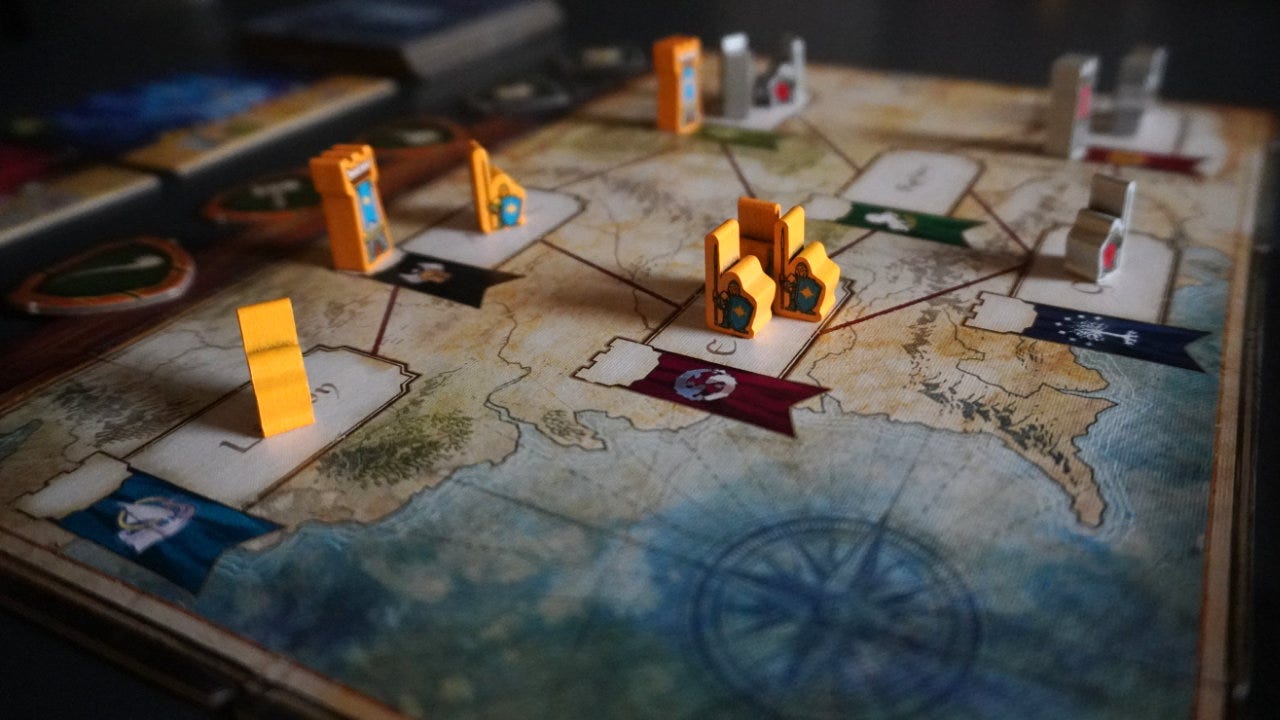
I play a lot of area control games. Whether you call it area influence, area majority, or area control, it’s one of my favorite genres.
When another designer asked me, “What would you want to see in an area control game?” it really made me think. I’ve played so many of them, many of which are in my top games of all time. Trying to pin down the most enjoyable elements, however, is no small task.
This week, I’m straying from the usual objective exploration of a particular game mechanism. Instead, this is my personal preference for what I’d want to see in an area control board game.
1. It needs a map.
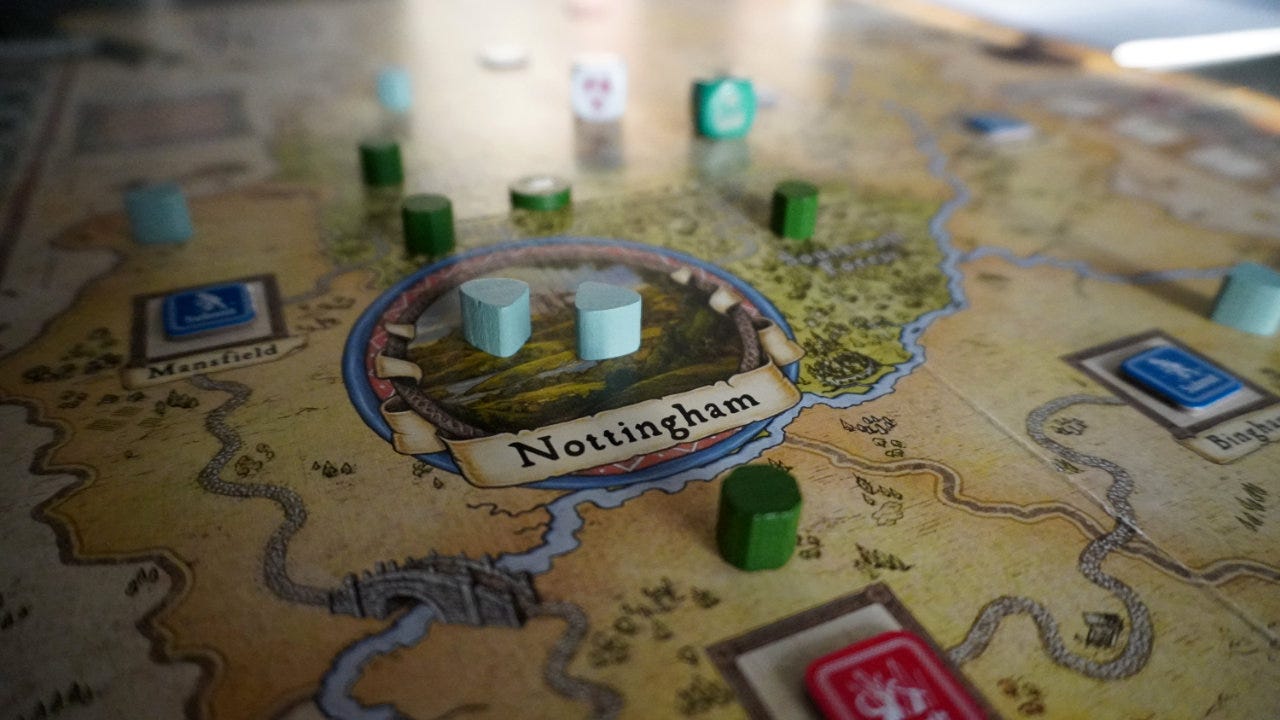
Probably the most important part of an area control game for me is the map. The map can be thematic or abstract, but there needs to be one. It’s important because by having a map, adjacency matters (i.e. which areas are next to others). It also can create interesting rewards for controlling specific areas (as done in Eschaton) or routes/paths through the areas that create interesting choices.1
So the game needs a map, but the map has to matter. If there’s a map and adjacency doesn’t matter, the areas are all equivalent, and there are no routes, well, then the map barely counts as a map.
There are, of course, exceptions to this. You could make the case that lane battlers are area control games, in which case no map is required.2
2. It needs an anti-turtle mechanism.
In Tabletop: Analog Game Design (Costikyan & Davidson, 2011), there’s a chapter by Lewis Pulsipher on the three-player problem. This is the problem that arises in three-player conflict games where the two players who are behind will team up and attack the player in the lead. This emergent “bash the leader” results in multiple problems such as the game going on too long or kingmaking.3
Pulsipher calls this “leader bashing” and goes on to identify three other gameplay problems including turtling — gameplay that focuses solely on defense rather than offense. It’s when a player hides in an uncontested corner of the map, letting the other players battle it out.4
Therefore, area control games need an anti-turtle mechanism — a way to force conflict and prevent players from avoiding combat altogether.
The larger the map, the easier it is to turtle, and therefore the more important it is to have an effective anti-turtle mechanism built into the game.
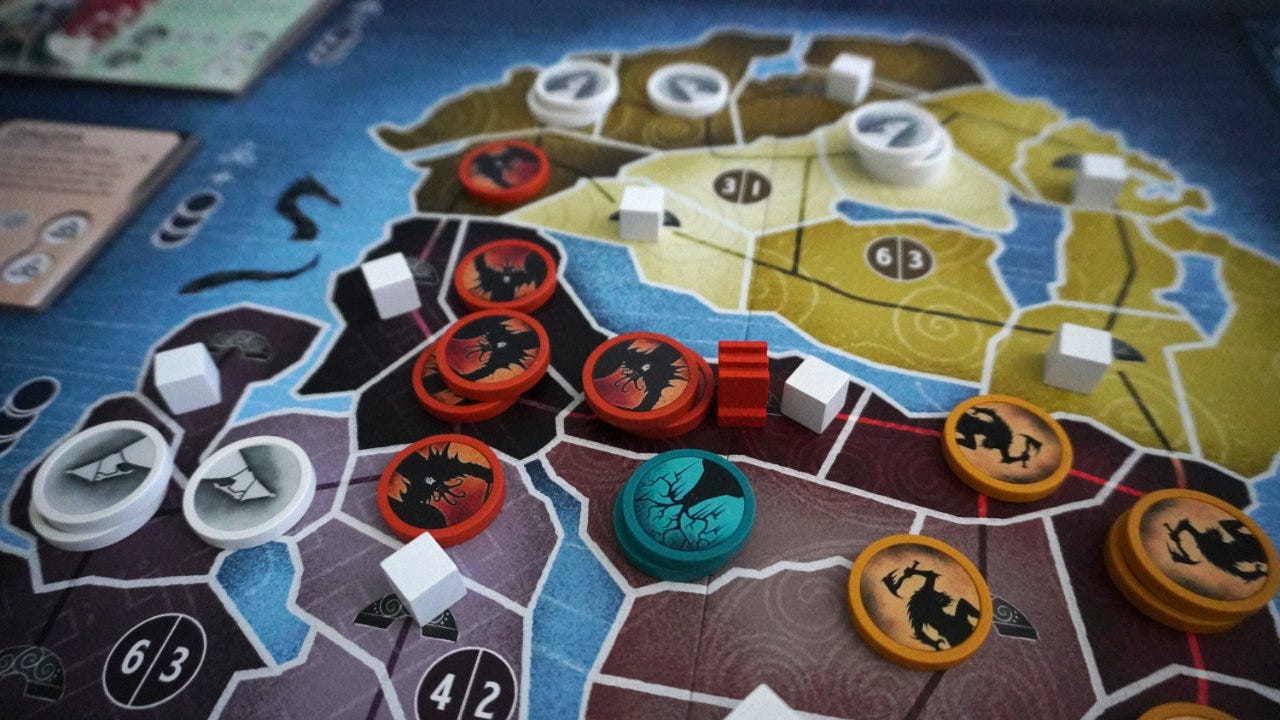
Blood Rage does this by destroying an area of the map each round, reducing the size of the map. It eventually pushes factions into conflict with each other.5 Eclipse: Second Dawn for the Galaxy solves this by the ever-increasing need for resources. To keep growing, you need to expand into an opponent’s territory.
It is notable that by building these mechanisms into the game, they naturally create a satisfying game arc, ensuring that the end of the game feels different from the beginning.
3. It needs a catch-up mechanism.
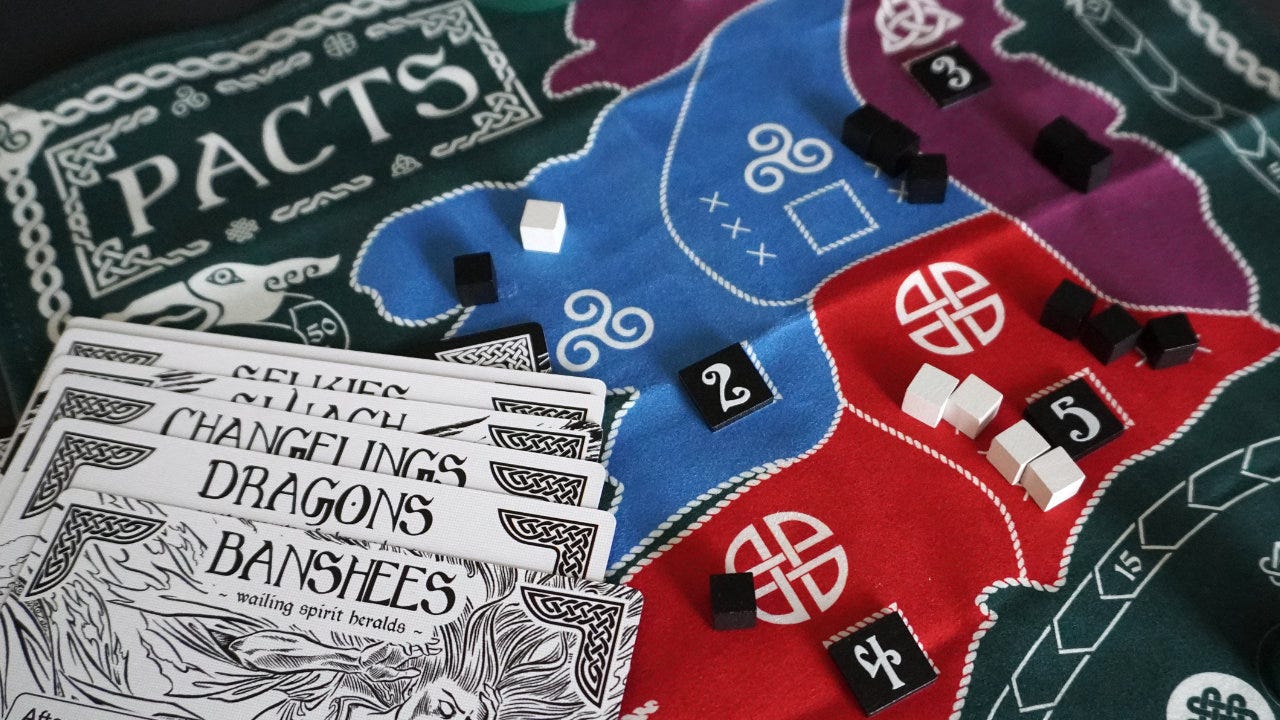
Area control games are often zero sum games. Someone’s gain (territory, resources, victory points) is someone else’s loss. While this core tension is one of the parts I enjoy most about the genre, it can also be very unforgiving.
In Rising Sun, for example, it is entirely possible to have a catastrophic first war phase in the game. Poor planning and some lost wagers in the zero-luck battle system can put the losing player in an almost unrecoverable position. It is possible to have all of your units wiped off the map. For a game that can run more than a couple hours, that can be suboptimal for the player who knows they can’t win.6
Therefore, area control games need some form of catch-up mechanism. A catch-up mechanism is some way to prevent the runaway leader problem where success leads to more and more success for the lead player. It’s a way to keep lagging players in the game and interested in what’s happening on the table.7
The catch-up mechanism can be as simple as giving the trailing player a better turn order position. More complex systems make it increasingly hard for the lead player to accumulate more territories or resources.
This is perhaps my most controversial opinion on this list. Some players would say you should just “get gud” and not get wiped from the map in the first place. It’s a “skill issue” they might say. While I agree with that in a theoretical sense, given my limited gaming time, I want to maximize the amount of fun for everyone at the table. Keeping everyone in the game is a core way of accomplishing that.
4. It needs asymmetry (maybe).
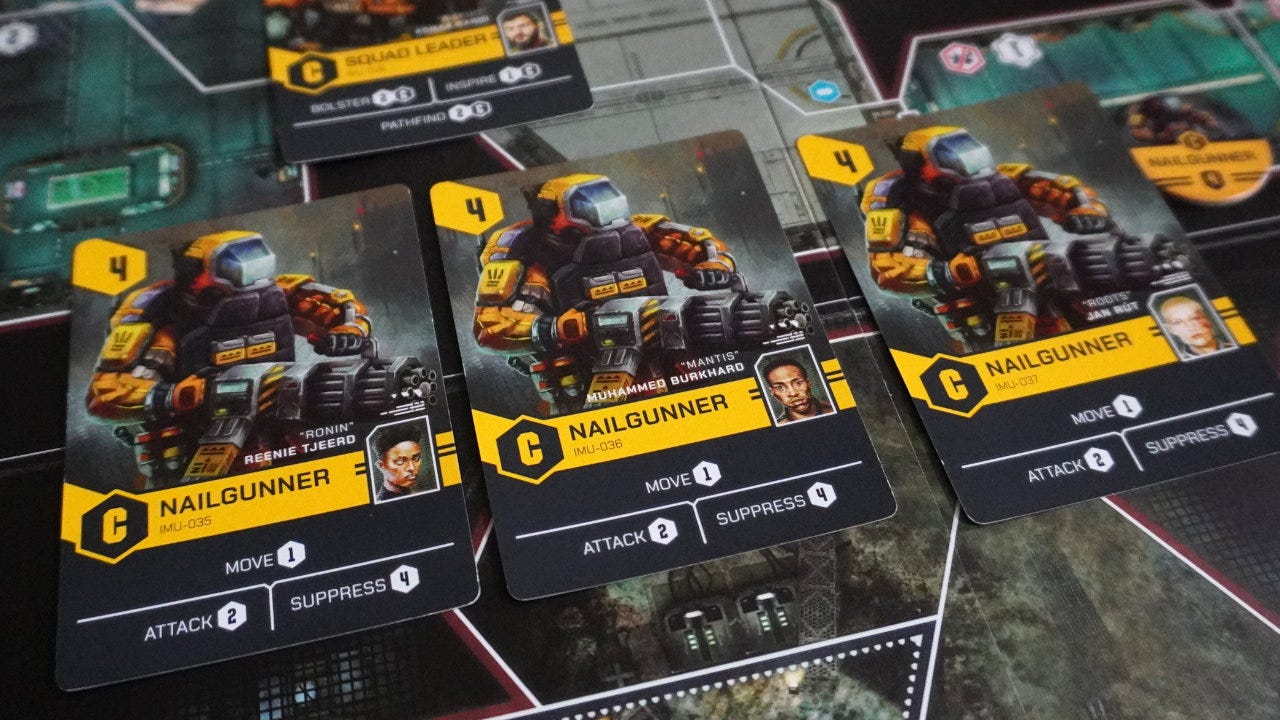
Asymmetry has been part of board games for hundreds if not thousands of years. Viking board games like Hnefatafl and European Fox & Geese games give the two players fundamentally different forces.8 This has continued in modern gaming with games like Cosmic Encounter, Dune, and Terra Mystica where player factions have their own rules. Root is perhaps the most well-known modern example of this.
Eclipse: Second Dawn for the Galaxy does a particularly good job of this.9 Each faction is only slightly different in mechanical ways, and yet they lead to vastly different emergent strategies when played. The factions in Rising Sun all feel like they have game-breaking abilities, and yet they are well-balanced in practice.
Asymmetry is particularly important in area control games because everyone is competing on the same map. Having unique factions with different abilities and goals leads to the emergent storytelling and narrative I value in these games. To me, it makes an individual play of a game more likely to be memorable.
I could be convinced, perhaps, that not all area control games need asymmetric factions. That said, I find that I enjoy area control games more if they have asymmetry or variable player powers.
Conclusion
Some things to think about:
What you want to see in a game: I found the question of “What do you want to see in X type game?” to be a surprisingly interesting one. I’ve played countless area control games but never took the time to carefully think about what I enjoyed about them. Choose a game genre you enjoy and know extremely well. Try the same exercise, listing the top 4 elements your ideal game would have.
A way to analyze games: Creating lists of important elements gives us a vocabulary and a way to analyze games. Rather than just saying “this game is fun” we can start to break it apart into its component mechanisms, allowing us to learn from it.
That’s just like, your opinion, man: While most weeks I dig into how a specific mechanism works (e.g. manoeuvre-based combat) this week is just my opinion. You might not care about catch-up mechanisms or variable player powers. I’d be curious to hear what your opinion is in the comments.
What do you think? Which of these area control game elements that are important to me are also important to you?
— E.P. 💀
P.S. Want more in-depth and playable Skeleton Code Machine content? Subscribe to Tumulus and get four quarterly, print-only issues packed with game design inspiration at 33% off list price. Limited back issues available. 🩻
Skeleton Code Machine is a production of Exeunt Press. All previous posts are in the Archive on the web. Subscribe to TUMULUS to get more design inspiration. If you want to see what else is happening at Exeunt Press, check out the Exeunt Omnes newsletter.
Skeleton Code Machine and TUMULUS are written, augmented, purged, and published by Exeunt Press. No part of this publication may be reproduced in any form without permission. TUMULUS and Skeleton Code Machine are Copyright 2025 Exeunt Press.
For comments or questions: games@exeunt.press
By the way, Eschaton is a great example of how to stack a deck in a game.
This line of thinking ends in madness. Eventually lane battlers are actually area control games which are just bidding/auction games.
Did I just call kingmaking a problem? I did because so many players dislike it in their games. I personally don’t mind it when implemented correctly in the right kind of game.
I’m guilty of this strategy when playing Blood Rage if I can get the cards to re-pillage repeatedly. I rarely join the call to battle and just speed-run my rage as high as possible.
This is the same method used in battle royale style video games like Fortnite, PUBG, and Apex Legends.
To be clear, Rising Sun is still one of my top games of all time. It is, however, an extremely unforgiving game for new players.
In video games, the blue turtle shell and Bullet Bill are classic examples of catch-up mechanisms.
The upcoming Tumulus Issue 7 “Slay the dragon.” has a version of the Fox & Geese game in it that you can try. It comes with design exercises to improve the game as written. It will ship in June 2026. Be sure to select Issue 7 as one of your four when checking out.
I’ve used Eclipse: Second Dawn for the Galaxy as an example at least twice in this article about area control games. It’s a 4X game played on a hex grid. Does that count as an area control game? I think so. Feel free to disagree with me in the comments.
I've mentioned this idea in an article about skirmish wargames, but since then I've started to suspect that it could apply to broader designs with any sort of direct contest/confrontation, including area control.
I think we could define area control as a variation of an auction: players place bids (commit forces/influence) to win certain stakes (control areas). Defining qualities of area control would be:
- bids are usually granular, rather than monolithic (you can commit specific amount of units/influence, rather than a fixed package)
- outcome of stakes usually impacts other stakes spatially (adjacency you've noted).
If that's true, then general principles for designing good auction games (such as skirmish wargames lol) should apply.
The most useful practical guideline I've found is that at any moment the system should spotlight certain, very specific number of hotspots (around 3), all of which demand immediate attention. Usually those have predictable outcomes that are sort of "floating in the air" and will come to pass unless you do something. All player actions concerning those should result in dramatic twists, rather than gradual buildup. If there's no clear spotlight, then action across the board becomes homogenous and grindy. If player actions merely adjust probabilities of the outcomes, rather than completely changing the most likely outcome, the game becomes a turtly push-pull trench warfare.
Good examples of this principle, area control-wise, would be Chaos in the Old World and Spectre the Board Game. And that's what I'm looking for!
Excellent article. I like all of it, although I don't worry about turtling as much as the others (I have played some great games of risk where turtling carried the day). What I do require is a well incorporated theme. Like in Arc Nova or Hard Rock 1977, you really feel what you are doing.