

This week we are exploring how interruptions (specifically information lookups) can impact the flow of a game.
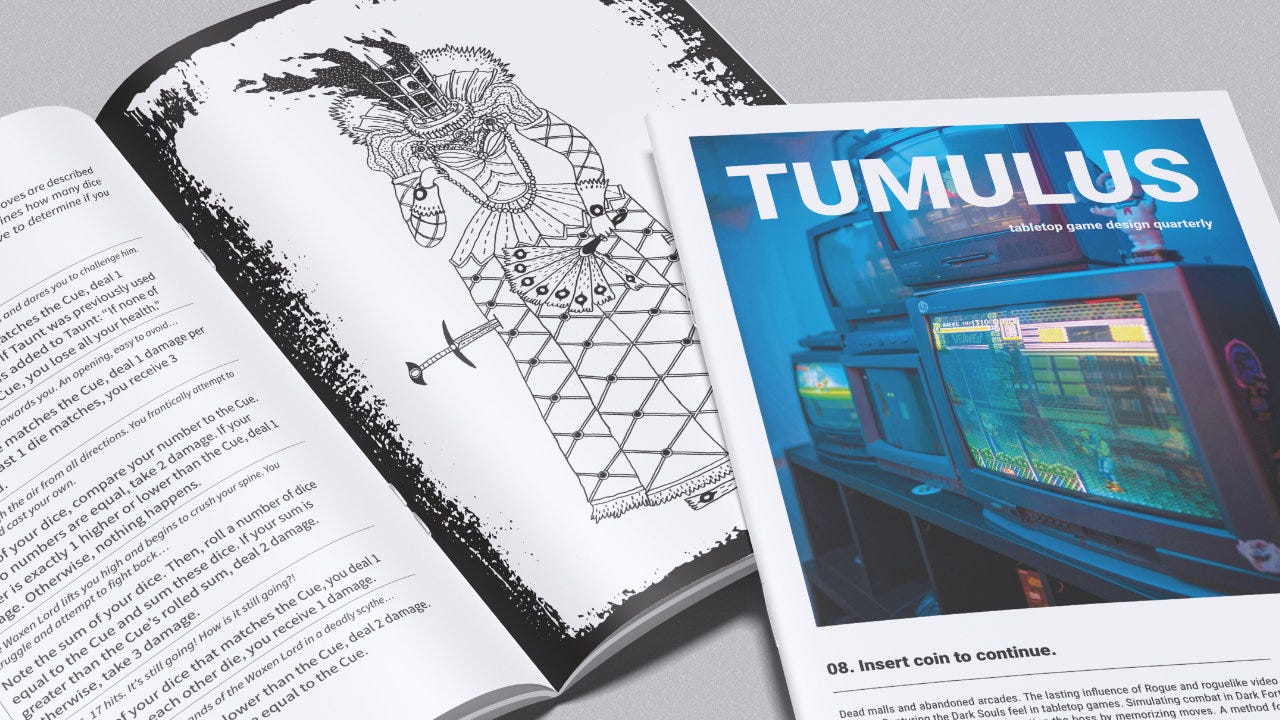
But first, I just want to celebrate that Tumulus has finished its second year of publication — the 8th quarterly issue is shipping now! This print-only tabletop game design zine has been my passion project for two years now.
My vision for it remains unchanged from what I’ve said before:
On a long enough scale, everything is temporary. The sun will engulf the Earth in somewhere between 5-8 billion years and everything will become a faint chemical signature left in a dying star. That said, I want Tumulus to be a print-only artifact that lasts. Perhaps not until the sun boils the oceans away, but longer than the PDF that gets lost on your hard drive among a hundred thousand others. I want it to be something you hold in your hand, notice on a shelf, and choose to pick up. Something that competes with doom-scrolling.
The current 56-page issue’s theme is dead malls, abandoned arcades, and roguelike games. It includes two playable games, design inspiration, and contributions by Junk Food Games (Necromancer Heretic) and Greg Loring-Albright (Ahoy).
Subscribe to get Issue 8 “Insert coin to continue.” as the first of your four issues, or pick up a back issue.
Now, with that interruption complete, let’s resume our primary task at hand!1
The science of interruptions

You know the feeling. You’re in a flow state at work and someone stops by for just a quick question.2 The phone rings and you recognize the number. An urgent email arrives that must be handled right away. Phone calls. Text messages. Ding! You’ve been sitting too long. Time to stand up! Ding! It’s your bedtime reminder, time to start winding down.
In 2008, The New York Times ran an article called “Fighting a War Against Distraction” stating that, according to Dr. Gloria Mark, “the average knowledge worker switches tasks every three minutes, and, once distracted, a worker takes nearly a half-hour to resume the original task.”3
That article was written 18 years ago, and I doubt things have gotten better since then.4
In addition, task interruptions are almost always considered to be a negative. According to UC Berkeley’s “The Impact of Interruptions,” it’s easy to see why:
“The impact of interruptions cannot be overstated. They kill our momentum. When we start again on our task, we can’t simply pick up where we left off, we have to reorient ourselves, re-immerse, and re-gain our momentum. The length of our recovery time depends on the complexity of our task; ranging anywhere from 8 minutes for simpler tasks to 25 minutes for more complex ones.”5
This idea of interruptions and their impact on flow states is something I think about quite a bit.6 As to be expected, my context for thinking about this is tabletop games.
Specifically, I’ve started to identify something in games that I’m calling lookups — interruptions to the primary task of the game that require the player to perform an informational subtask.
But first we need some definitions.
Interruptions vs. distractions

Not everything that competes with our attention while playing a tabletop game (or performing some lesser task) is an interruption. In particular, it’s important to separate distractions from actual interruptions:
Interruption: An external event or force that requires a direct and immediate reaction. Your attention is demanded. A phone call or a knock at your door.
Distraction: Something external that competes for your attention and can degrade your focus on the main task. It doesn’t directly demand your attention and you don’t need to react to it. It can be (hopefully) ignored. Phone notifications, background noise, music, people talking.
I like the concise definitions in “Differential Effects of Interruptions and Distractions on Working Memory Processes in an ERP Study” (Zickerick, et al., 2020). Interruptions are “interfering stimuli to respond to” while distractions are “interfering stimuli to be ignored.”
When discussing the concept of lookups, I mean ones that are interruptions and not things that are distractions. Even more specifically, they are interruptions that are built into the game.
Identifying lookup events
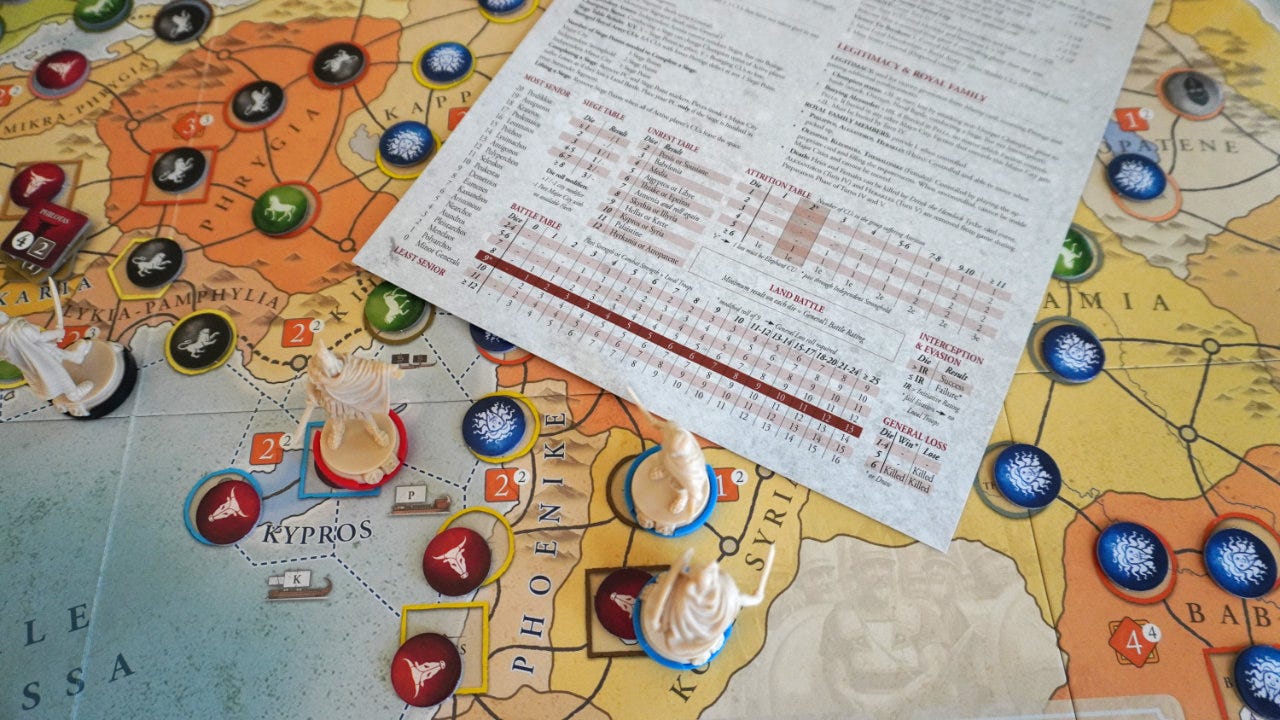
I’ve done what I consider to be due diligence in trying to find others who have already identified and named this concept. If it’s out there, please let me know in the comments. In the meantime, here’s my proposed definition of a lookup event in a game:
A lookup is a required event in a tabletop game that causes a player (or players) to interrupt the main flow of the game to reference some information that is part of the game. After performing the lookup, they resume the main flow of the game.7
Breaking that down into some common elements of lookups:
It is a required (expected) part of the game that a reasonable player would need to perform to be able to play the game.8
It stops the normal flow or core game loop gameplay while players perform some information gathering task. Gameplay is blocked until this task is completed.
It is a non-thematic part of the game, meaning that the task exists outside the thematic world of the game.
Everything required to perform the lookup is included in the game, existing in the rulebook, player boards, or other standard game components.
The lookup is performed to accomplish some mandatory task:
Retrieve information or stored values
Resolve the outcome of an event or action
Perform a calculation using information on the board or player sheets (i.e. looking up information) and use the output to complete a task9
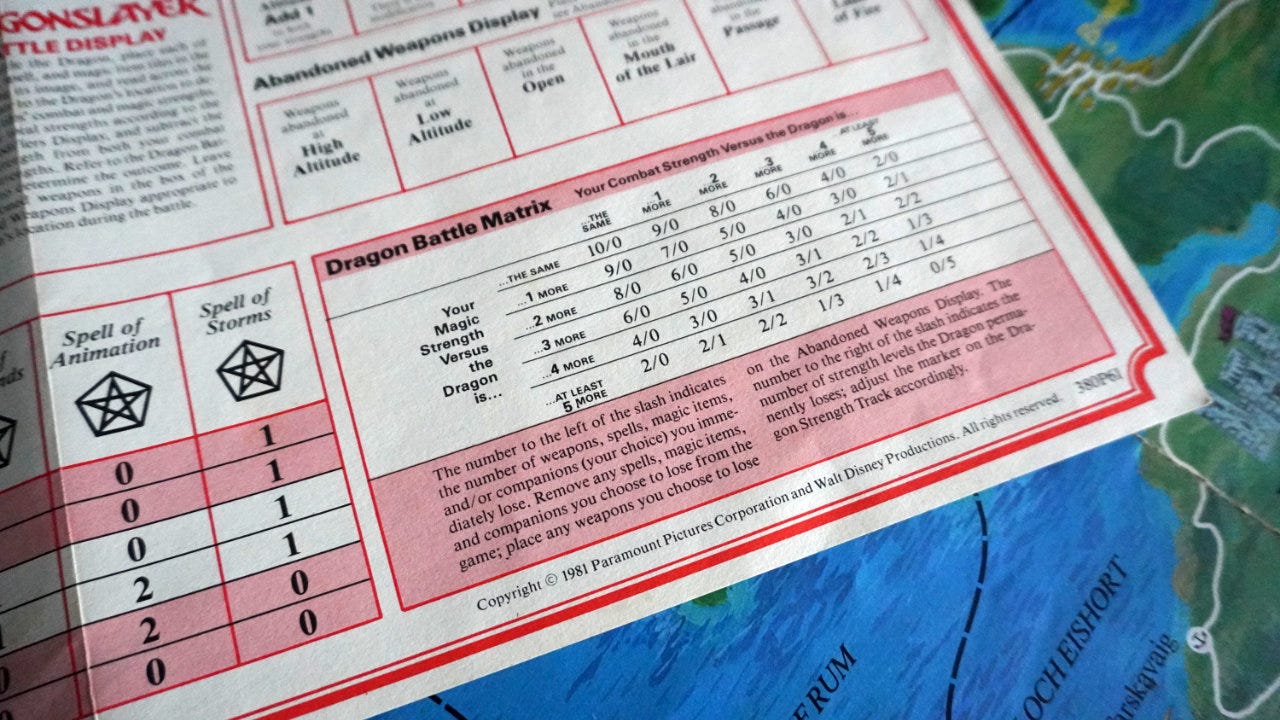
The most obvious example of a lookup to me shows up in historical wargames: the combat results table or CRT. In many classic wargames, the CRT is used to resolve combat, first by calculating attacker and defender odds (or factors) and then rolling a die. The odds and die roll are cross referenced on a table (i.e. the CRT) and the results indicate the outcome of the battle. Attacking or defending units are eliminated, forced to retreat, or routed.
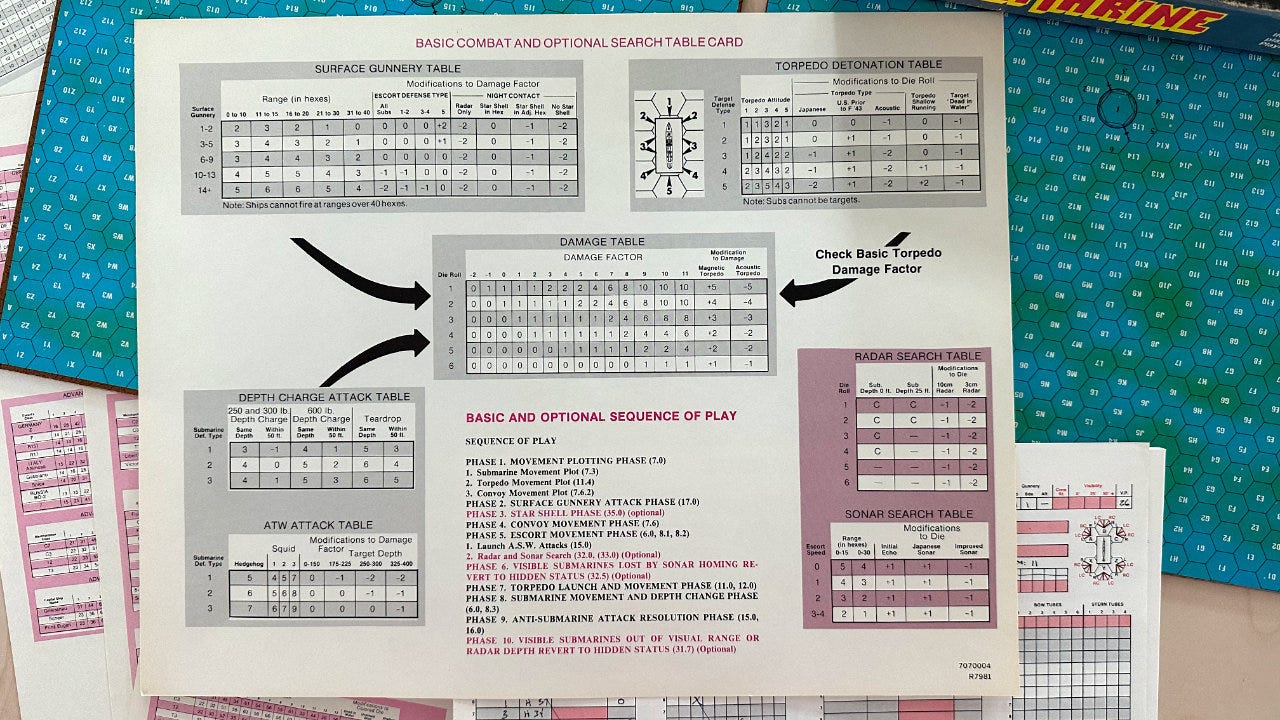
Imagine my friend and I are playing a wargame, taking actions, moving units, and trying to outflank each other. Eventually our units smash into each other and a battle occurs. At that point, the game effectively stops for a moment. One of us needs to grab the card with the CRT, do a little math perhaps, and then look up the information on the table. That’s the lookup event. After rolling a die, we resolve the combat and are back into the game, almost exactly where we left off.10
As a counterexample, I do not feel that having to reference the general rules of a game during gameplay counts as a lookup event. Having to check a rule does interrupt and halt normal gameplay and it is a non-thematic part of the game. Everything needed to check the rule is included in the game. It is not, however, a required (expected) part of the game. There is no step that says, “Now re-read Rule 5.1 because you forgot how it works.”11 Rule checks are, by their nature, unexpected. This is not a lookup event.
Having to stop gameplay while everyone performs interim scoring (looking up information on the board, counting things, checking values, adding, multiplying) to update the player order each round would count as a lookup in my opinion.
Checking a table, even a simple one, to resolve an action counts as a lookup. For example, even a Rock Paper Scissors type game might require a lookup to determine which symbol beats which if it is written down and an explicit part of the game.12
Pizza being delivered and the doorbell being rung while playing a game would not count as a lookup.13
Not all lookups are created equal
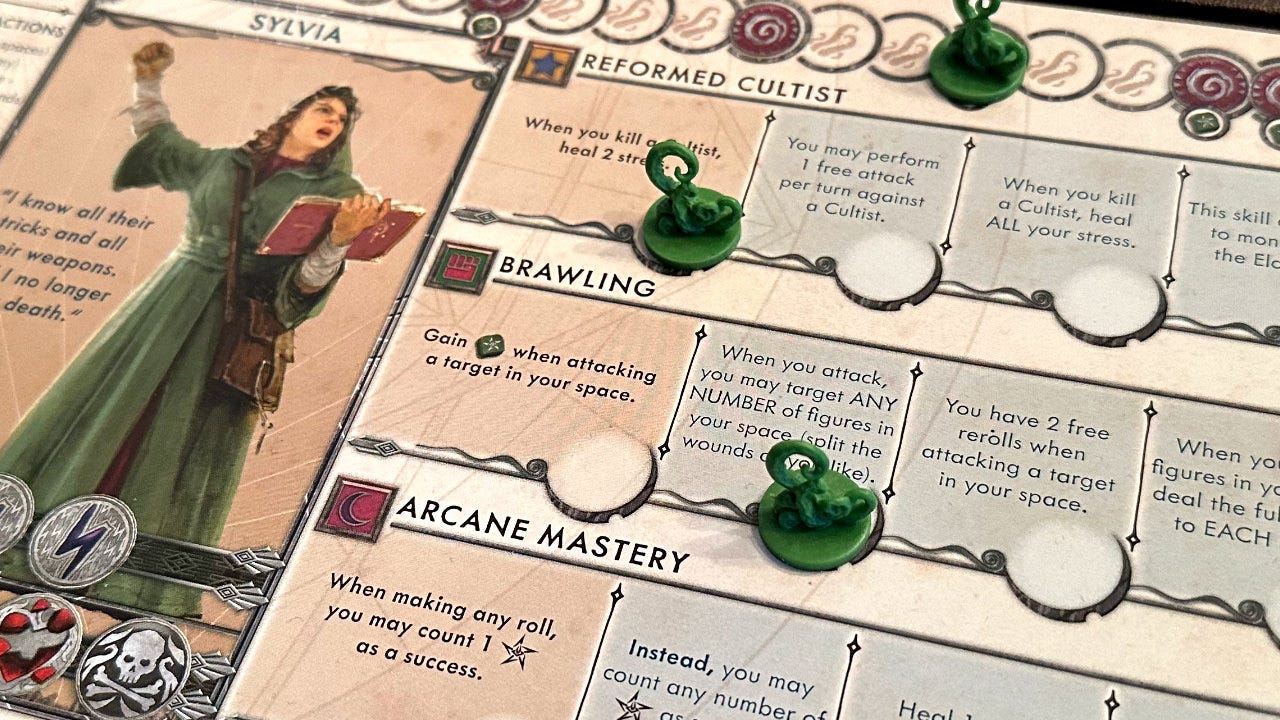
You could, of course, be very silly and take this lookup definition to the extreme. For example, is it a lookup every time I so much as look at the value of a card? That’s obviously not what I’m talking about here.
Still, it gets to the idea that not all lookups are the same. Some might require a prolonged stoppage of the game while all players reference some sort of table to determine an outcome. This could last for minutes. Alternatively, a lookup might be almost instantaneous — glance at a table on your player board and resume play. They both are lookups, but they are quite different in practice.
Using “Interruption science as a research field: Towards a taxonomy of interruptions as a foundation for the field” (Stangl & Riedl, 2023) as inspiration, I’d argue that lookups therefore have specific factors associated with them.14 These factors describe how impactful the lookup might be.
Here is what I would propose for lookup factors:
Frequency: How often does the same, specific lookup occur? Is it once per game or does it happen every round? Is it required for every combat encounter or only in special situations?
Duration: How long does the lookup take? Is it less than a minute or multiple minutes long? Does the duration decrease as players master the game?
Cognitive load: Does the lookup require significant mental demand to complete? Is it a simple check of a list or does it require cross-referencing a table? Does it require calculation, remembering, searching, or other complex operations?
Flow disruption: How much does the lookup impact the overall flow of the game? Does it interrupt flow for a single player or for everyone at the table? Does it require a significant mental switch in and then back out of the task?
A card game might require a lookup for each player every round of the game. That would be a lot of lookup events, but perhaps each lookup is less than 2 seconds long and only interrupts that individual player — it never interrupts the overall game for all players.
That would be very different from a wargame where lookups are relatively rare, but when they happen it halts the entire game for all players. The CRT lookup might require 3-5 minutes each time it happens.15
So what is the cut-off? How many lookups are too many? How long is too long for a lookup?
Shouldn’t we try to reduce or eliminate lookups from games?
Lookups are neither good nor bad
I want to be very clear that a lookup is not inherently a bad thing.
Let’s take CRTs as an example. As noted in The Complete Book of Wargames (Freeman, 1980), the CRT adds a level of granular control that is necessary in faithful historical simulations:
“If the die is the hammer of chance, the Combat Results Table is the anvil of probability. Very simply, the CRT is a collection of the results of outcomes of battles fought at each of the specified set of odds. … The CRT ensures that the results are not merely haphazard by altering both the outcomes that can occur in any particular column and the odds that any given outcome will occur.”
If you want to create a highly detailed historical conflict simulation game with precisely detailed probabilities, the venerable CRT might be exactly what you need. It adds a lookup (and a non-trivial one at that) to the game, but that doesn’t mean it is the wrong thing to do. It simply means that there is one more lookup event added to the game, along with any others that might already be there.
On the other hand, imagine you are trying to make a highly thematic, immersive roleplaying game that is meant to be played in a breezy, storytelling way. Having a 5-minute lookup periodically would certainly feel like an interruption — a rather unwelcome one I might imagine.
Whether a lookup belongs in a game or not depends on the promises the game makes to the player, the kinds of fun the players expect, and how the game handles theme vs. mechanisms.
Quantifying lookup events in games
Instead of making a value judgement on lookups as a whole, I would instead propose them as one more tool in a designer’s toolbox. Or, more accurately, another way to quantify and measure the feel and performance of a tabletop game.
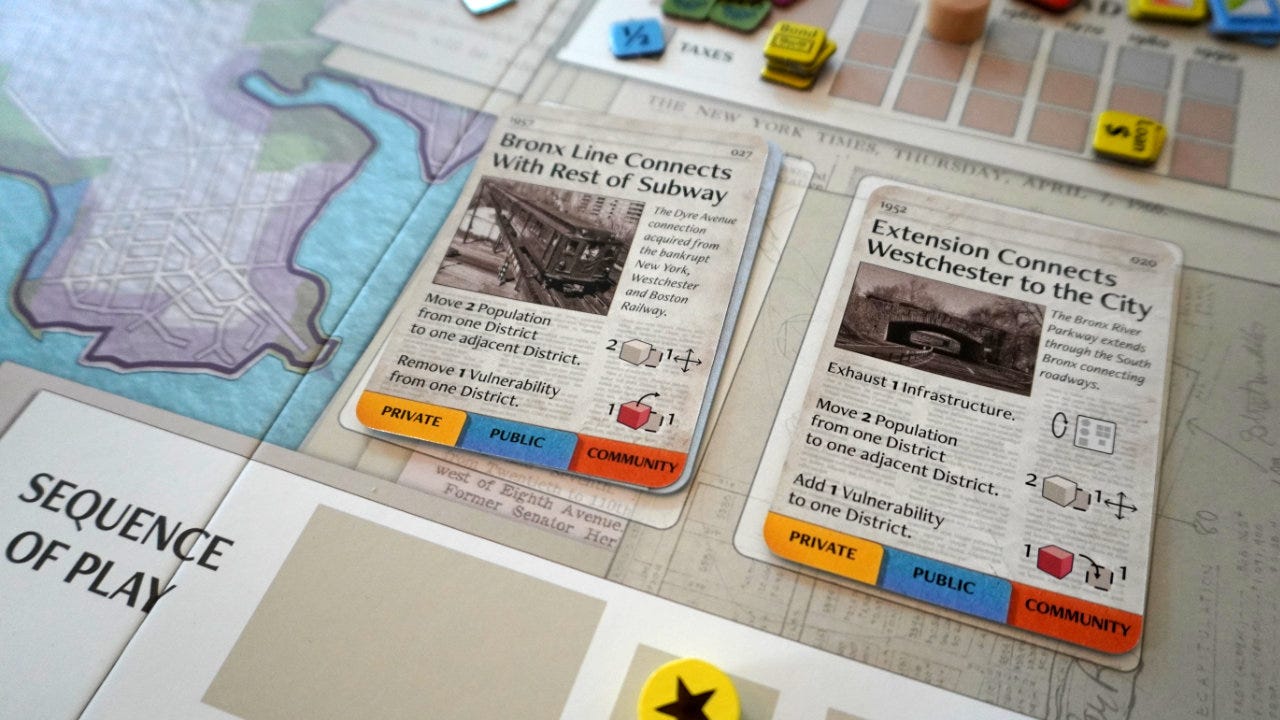
Lookups can be identified and quantified (counted) during design and development of a game. That lookup inventory (i.e. list of all lookup events in the game) can then be qualitatively described using the factors noted above: frequency, duration, cognitive load, and flow disruption. Together, that information acts as a baseline for the game.
We can then go back and really think about each lookup in the game: Does it need to be there? Can it be made less severe in duration, frequency, or cognitive load? Can we make it interrupt a single player instead of the whole game? Can we eliminate it by using custom components?
The goal would not be to eliminate all lookups, because that would miss the point. Lookups are often required for games and might be the best solution. But lookups can also be disruptive, yank players out of the world of the game, and frustrate players if not handled carefully.
Instead the goal would be to be thoughtful about each lookup in the game.
Think about if it serves the goals of the game and if it supports the experience we desire our players to have.
You have homework.
This week you don’t get to just read Skeleton Code Machine for free and go about your week. Nope! This week you, dear reader, have homework!
As you play, design, or think about games this week, choose one specific game. It can be a board game or TTRPG — doesn’t matter which. Play the game or analyze it in detail. Then do the following:
List: Make a written list of all of the lookup events in the game. Give them each a short name or description so you can remember what they are.
Describe: For each unique type of lookup, give it a qualitative description using the factors: frequency, duration, cognitive load, and flow disruption.
Improve: Choose one or two of the lookup events. Consider how you might reduce the severity of them. Can you reduce their frequency? Can they be eliminated from the game entirely by using different components?
I promise that after this exercise, you’ll look at games differently. You’ll begin to automatically notice lookup events and think about them critically. Not in a way that considers them all bad, but rather in a way that allows you to make better games.
Report back with what you found in the comments!
Conclusion
Some things to think about:
Interruptions are a big deal: There’s an entire field of interruption science that looks at task interruption, information retrieval, task switching, and task resumption costs. It’s fascinating stuff that only is going to have more importance as attention becomes the most valuable thing in the global economy.
Lookups are a specific type of interruption: I’m proposing something called a lookup that is a very specific kind of game interruption where a player needs to stop normal gameplay to perform some sort of information retrieval. Not all interruptions are lookups. Checking the rules is not a lookup.
Not all lookups are the same: Lookup events differ in many factors including frequency, duration, cognitive load, and flow disruption. Not all lookups are bad, not even ones that require a non-trivial amount of time. It is up to the designer (using playtest feedback) to decide which lookups make sense in a given game.
What do you think about lookups in games? How do you decide when a lookup is good and necessary vs. one that needs to be reduced or cut?
— E.P. 💀
P.S. Want more in-depth and playable Skeleton Code Machine content? Subscribe to Tumulus and get four quarterly, print-only issues packed with game design inspiration at 33% off list price. Limited back issues available. 🩻
Skeleton Code Machine is a production of Exeunt Press. All previous posts are in the Archive on the web. Subscribe to TUMULUS to get more design inspiration. If you want to see what else is happening at Exeunt Press, check out the Exeunt Omnes newsletter.
Skeleton Code Machine and TUMULUS are written, augmented, purged, and published by Exeunt Press. No part of this publication may be reproduced in any form without permission. TUMULUS and Skeleton Code Machine are Copyright 2026 Exeunt Press.
For comments or questions: games@exeunt.press
See what I did there?
A flow state is that feeling of being “in the zone” or being so engrossed in a task that you may lose track of time. It’s similar to hyperfocus, but not entirely the same thing.
“Fighting a War Against Distraction” The New York Times, June 22, 2008.
This is not just a modern phenomenon either. Researchers (particularly psychologists) have been studying interruptions since at least the 1920s, giving us the Ovsiankina effect and the Zeigarnik effect.
“The Impact of Interruptions” at UC Berkeley Wisdom Café Wednesday.
Note that most of the research on interruptions is in the context of productive tasks and not in gameplay situations. Any of the research outcomes and conclusions in the cited papers may not apply to games — at least not directly.
I’m going to use lookup, lookup event, and lookup task all interchangeably in this article.
I’m noting “reasonable player” here. I do not consider memorizing reference information, tables, and other lookup targets as a viable way to eliminate the lookup. That just adds a secondary memory recall game on top of the primary game. Also, I’m bad at memorizing things. :)
I considered excluding calculations from my definition. If I were more strict, I’d exclude those and only include checks of actual reference information (e.g. tables) included within the game. Could this definition be revised in the future? Perhaps!
Notably the game state has changed due to the combat, so the game isn’t exactly where we left off. As Plato notes in Cratylus, “Heraclitus, I believe, says that all things pass and nothing stays, and comparing existing things to the flow of a river, he says you could not step twice into the same river.”
It would be moderately amusing if a game rulebook did do this.
In the most simple example, you could argue that Rock Paper Scissors priorities have been so culturally ingrained that no lookup is required. I could get behind that idea. My thinking is more about modern board games that might have a more complicated Rock Paper Scissors mechanism that may include many symbols rather than just three.
It would count as lunch.
“Interruption science as a research field: Towards a taxonomy of interruptions as a foundation for the field” Stangl & Riedl, Frontiers in Psychology, March 22, 2023.
Wargamers will often say that after a while you’ll memorize the tables and won’t have to check them as often. I’ll just note that even at the end of a 6+ hour game of Successors: Fourth Edition, we were still checking the table each time.