
First, welcome to all new Skeleton Code Machine subscribers!
There’s been a surge in new subscriptions recently. In fact, we are fewer than 50 away from having 6,000 newsletter subscribers! I’d love to reach that milestone before the end of the year, so please share Skeleton Code Machine with your friends.
If you are new here, Skeleton Code Machine is an ENNIE-nominated and CRIT award-winning weekly newsletter exploring tabletop game mechanisms — named one of the Best Board Game Resources of 2025 by Cardboard Edison. It’s absolutely free, including the over 240 posts in the archive.
Not sure where to start? No problem. Start here!
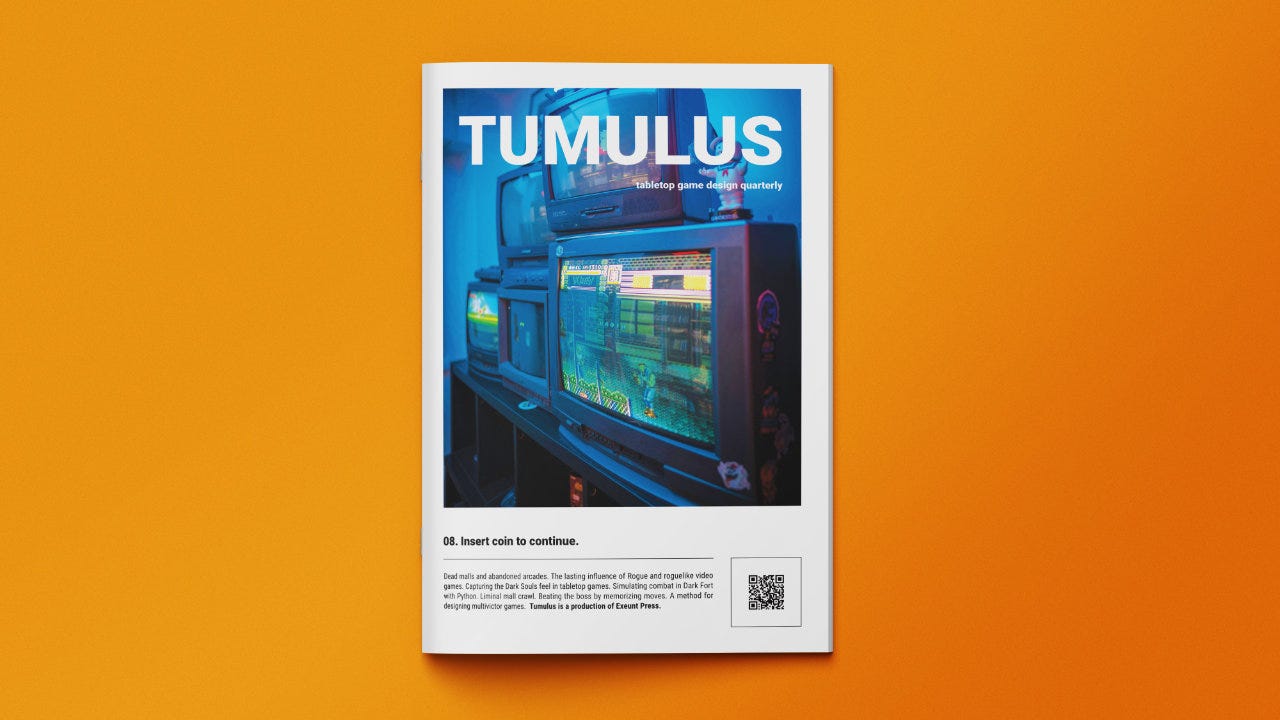
And if you want more of what you find here, plus playable games and hands-on design exercises, check out Tumulus. It’s a print-only tabletop game design quarterly. A Tumulus subscription gets you four issues at a significant discount, and it doesn’t auto-renew so it works great as a gift!1
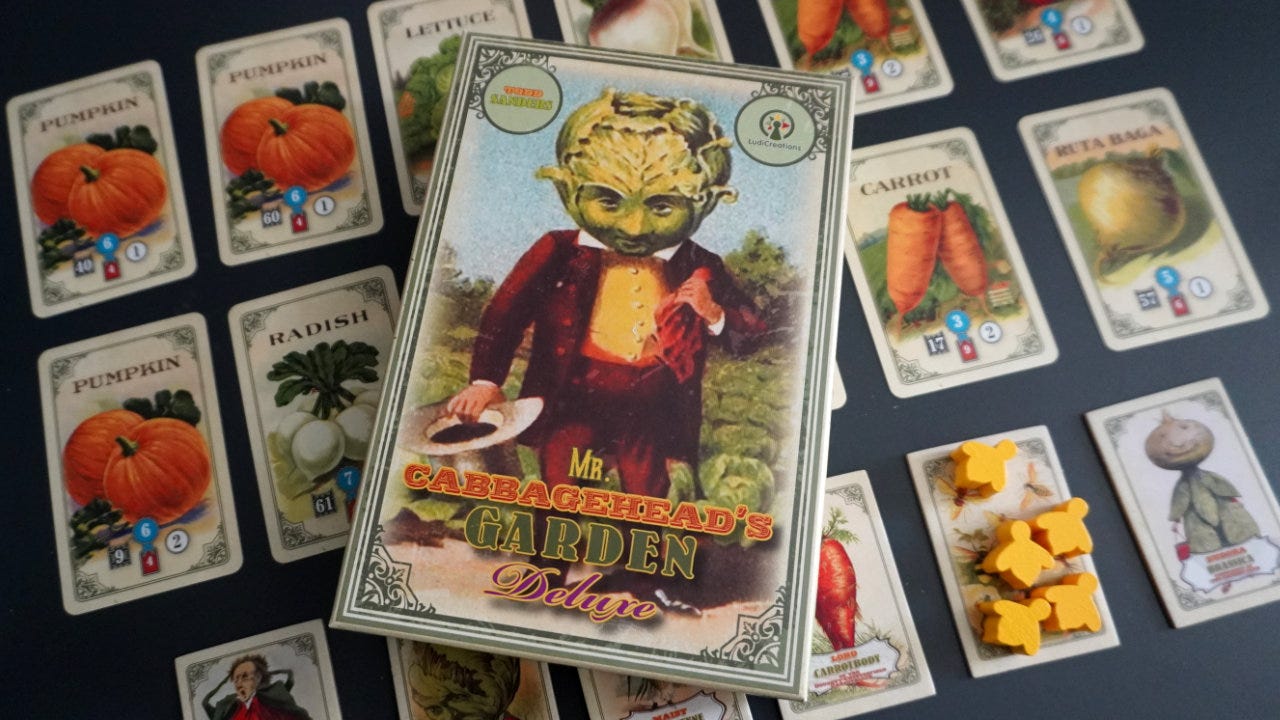
And now, let’s see how Mr. Cabbagehead’s Garden creates an interesting little resource system with just six tokens.
Mr. Cabbagehead’s Garden
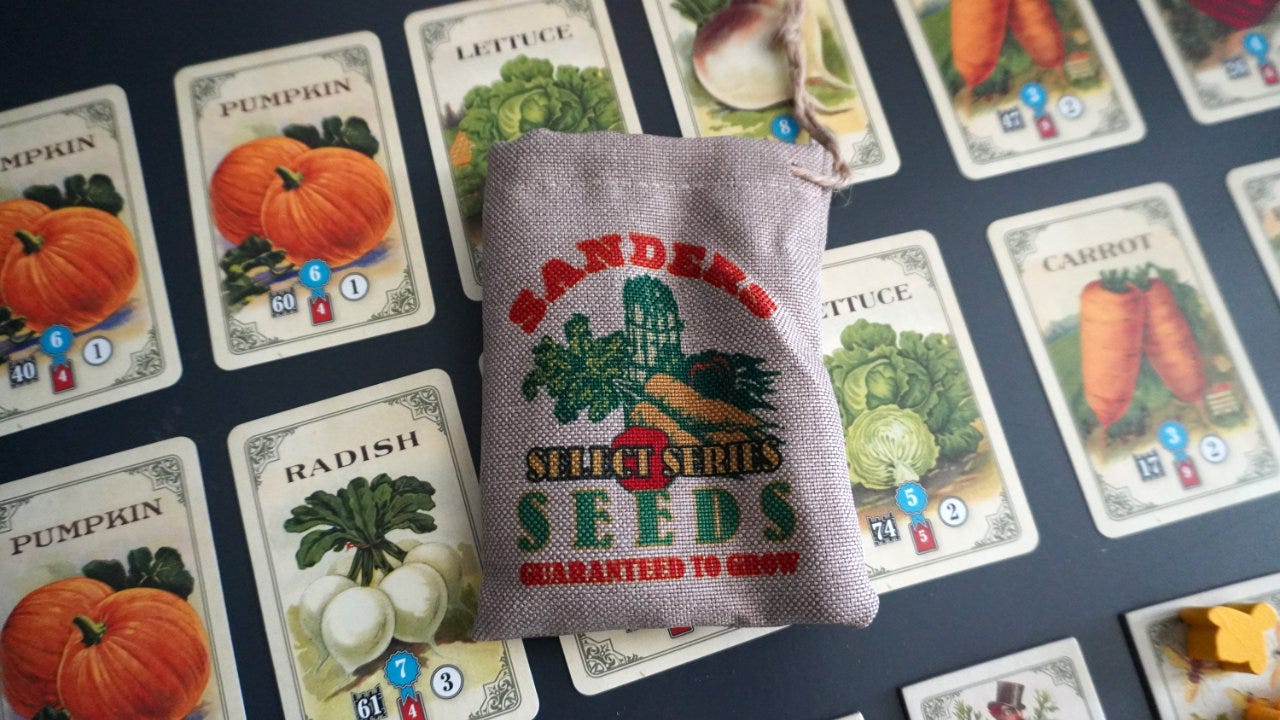
Poor Mr. Cabbagehead just wants to grow his garden:
“Each year Vernon Cabbagehead, (Mr. Cabbagehead to his friends), wants to be left in peace to grow his award-winning vegetable garden for the annual Garden Club contest. However, his tedious neighbours tend to interfere when he is away, and frequently drop by to help themselves to the garden produce. Can Mr. Cabbagehead create a beautiful garden and finally win the blue ribbon?”
That’s the premise of Mr. Cabbagehead’s Garden (Sander, 2016), originally released as a print-and-play game in 2016 and then released as a deluxe edition in 2018.2
It’s primarily a solo game, but it does have a two-player version as well.
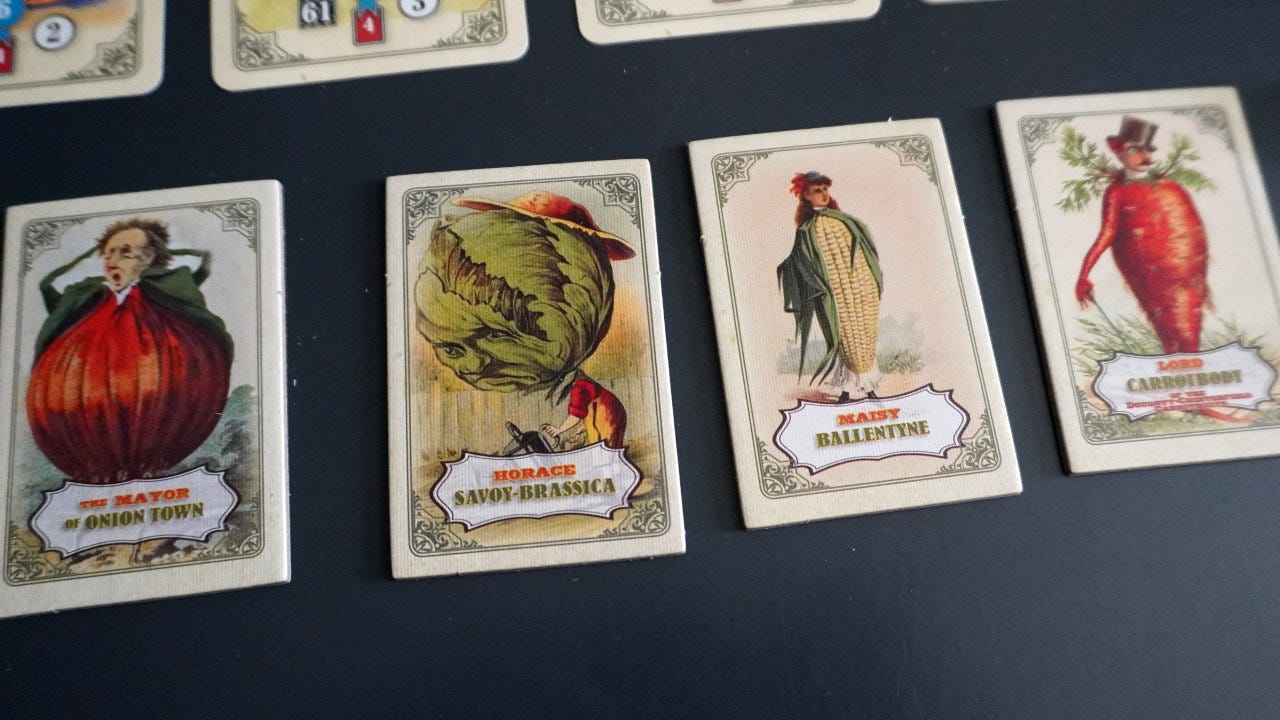
You’ll draw vegetable cards, plant some in your garden, and then a holiday will arrive. Based on the tokens drawn during the planting phase, one of your meddlesome neighbors will mess with your garden. They might remove a vegetable or move your bees around, after which the planting resumes.
After the third holiday, the game ends and your garden is scored. Any vegetables adjacent to the same vegetable (e.g. two carrot cards next to each other) will be scored for their face value. Lone vegetables score zero.
There are also special Awards of Merit that earn points for special configurations. The Four Corners gets you 12 points if all four corners of your garden are occupied by the same type of vegetable card. The Mixed Plot nets you 30 points if each row has exactly three types of vegetables in it and each type of vegetable is present in only a single row.
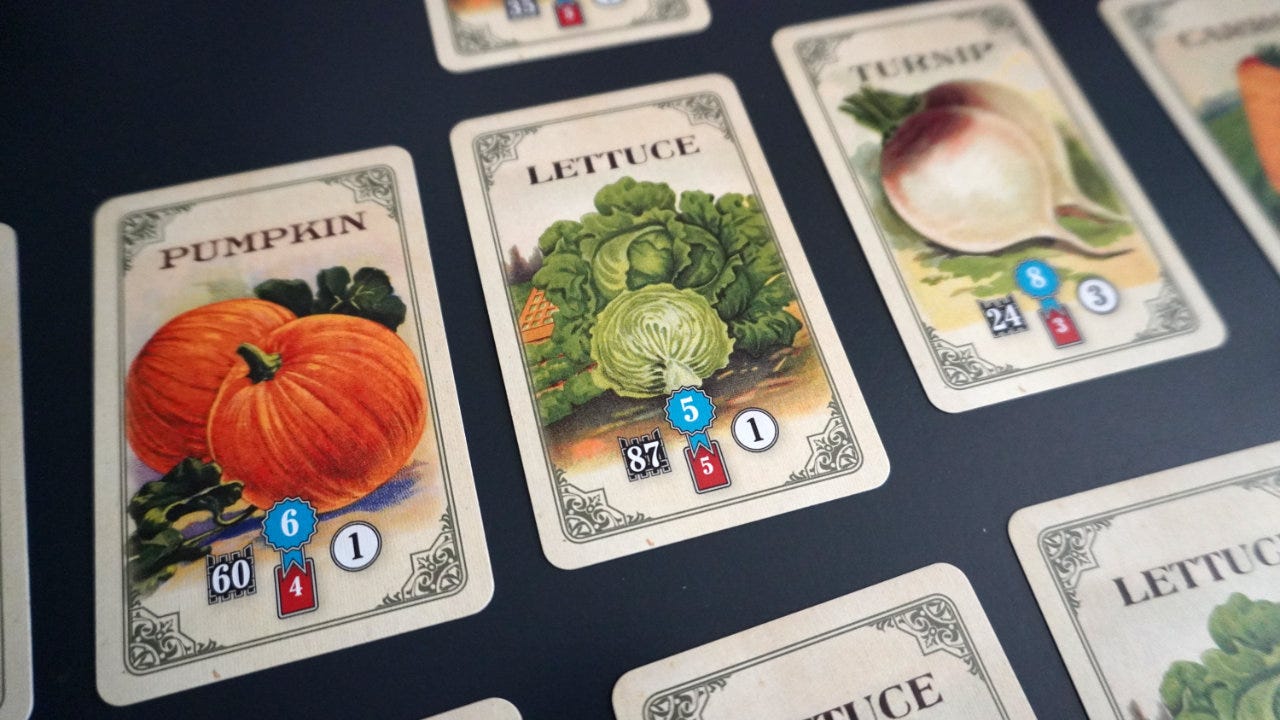
Eudora Brassica awards you a Garden Club Prize Ribbon based on your final score. They range from the White Ribbon and “polite murmurs” (51-75 points) all the way up to the Blue Ribbon and “a rousing hurrah” (126 or more points).
That’s the game. It’s a quick tableau-building puzzle for the most part. It’s the bit where you choose your vegetable card to plant (and how you pay for it) that I found particularly interesting!
Spending and gaining bees
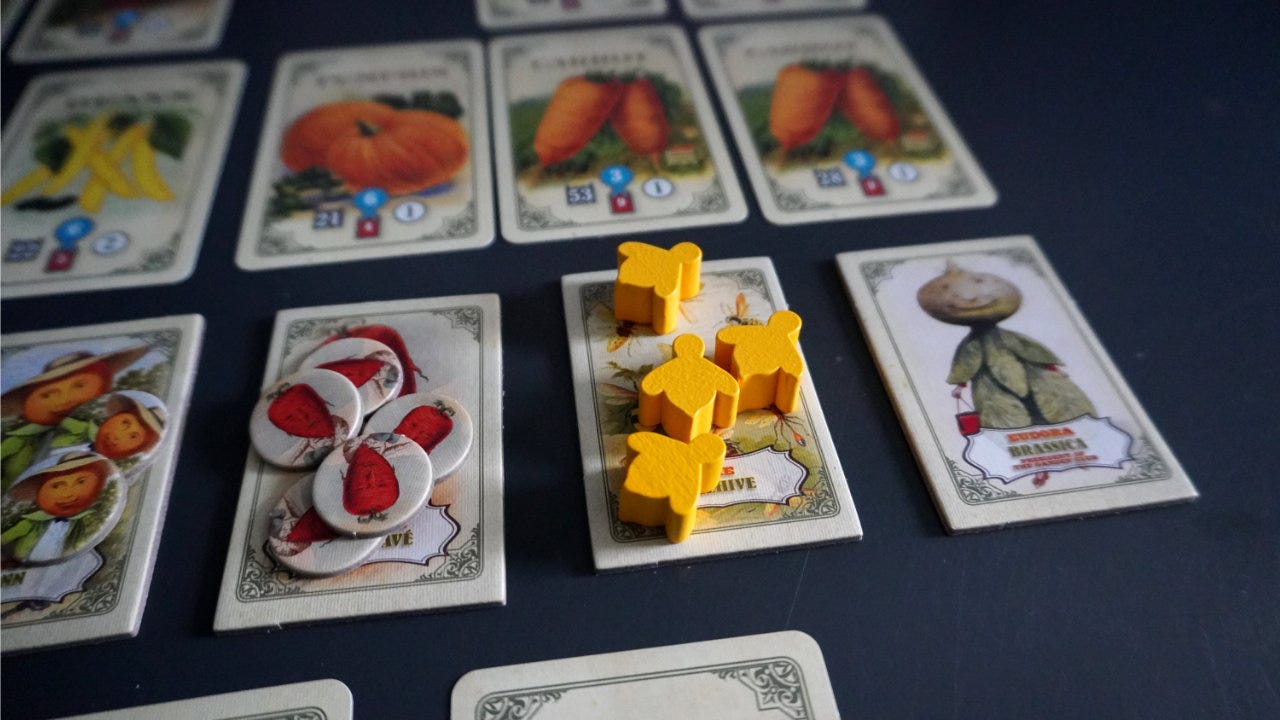
Each turn you’ll draw and reveal three cards from the deck, placing them left to right. You must then choose which vegetable to plant in your garden — and where to plant it. Remember, they only score their face value if they are adjacent to vegetables of the same type, and the whole garden is locked to a 6x3 grid.
Let’s say you draw beans, pumpkins, and carrots as your three cards (left to right).
You must choose one of them:
Left: To play the leftmost card (beans), you would need to pay 1 bee from your personal supply to the bee hive.
Center: To play the center card (pumpkins), there is no cost. You don’t need to spend or take a bee.
Right: To play the rightmost card (carrots), you must take a bee from the hive and place it in your supply. If there are no bees left in the hive, you can’t play the card.
Having to pay resources to play a card is nothing new. The twist here has two parts:
Sometimes you need to pay a resource to the hive. Other times you need to be able to take a resource from the hive. It’s an ebb and flow — back and forth.
There are only six (6) bee tokens in the game!
This turns what might have been a standard resource-buy system into something quite interesting! With just six tokens in the entire economy, it becomes a bit of a balancing act to manage their locations. Play too many leftmost cards (shifting from supply to the hive) and you’ll run out of bees in your supply. If you don’t play enough leftmost cards or too many rightmost cards, you’ll run out of bees in the hive.
Luckily, you can never get yourself too far in a ditch. The bees will be in one of the two locations, so you’ll always be able to choose from two of the three cards at a minimum. This prevents the dreaded Hobson’s choice from rearing its ugly head.
Drawing tokens
It’s worth mentioning that the cards not chosen have an impact on the game as well.
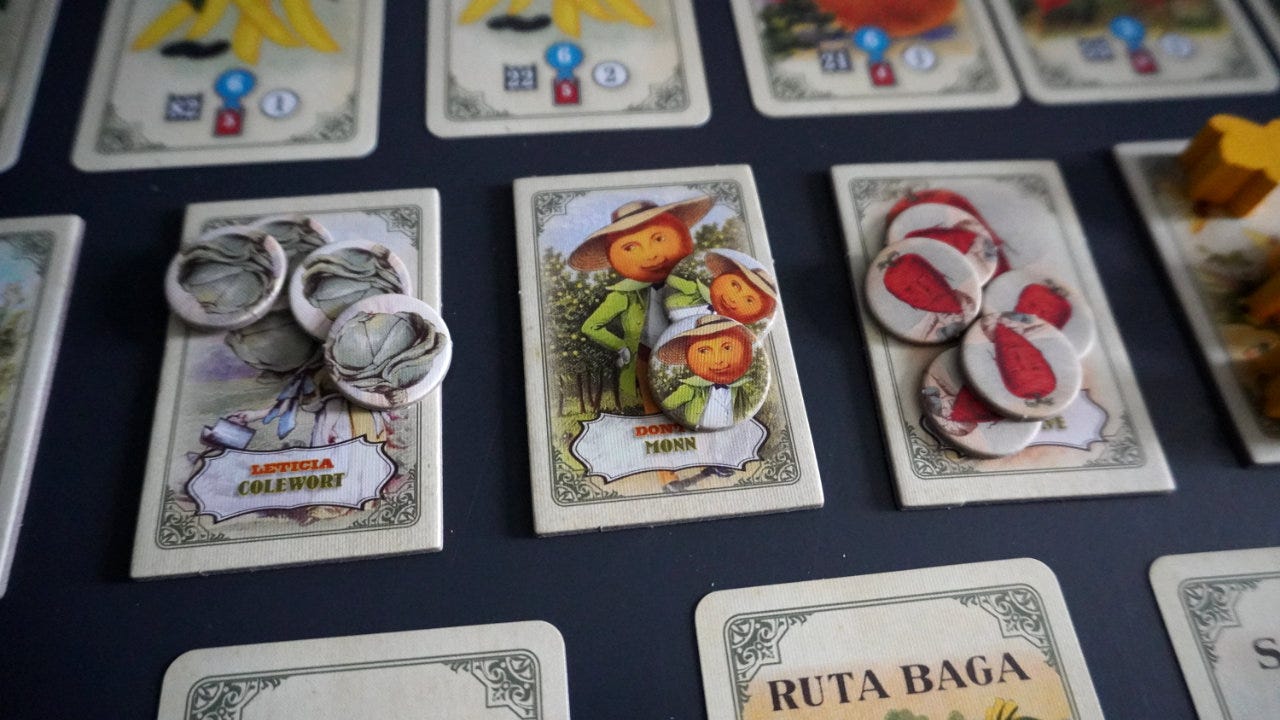
After choosing and playing one of the vegetable cards, the remaining cards are used to determine how many neighbor tokens are pulled from the bag — specifically the one with the highest card number. That results in pulling 1, 2, or 3 neighbor tokens.
While the neighbor activation is (to me) mostly random, this does allow the player to have some control. Pulling more tokens is perhaps more likely to shift the active neighbor for the round. Fewer tokens might make the active neighbor less like to change.
Each neighbor has a unique impact with some far worse than others. So it makes sense to try to nudge that part of the game in your favor.
Conclusion
Some things to think about:
Simple systems with fun choices: Skeleton Code Machine is all about drilling down to look at a single mechanism inside a larger tabletop game. In this case, it’s the drawing of three cards and the tight economy used when playing one of them. It creates tough choices for the player without a ton of rules overhead.3
Cards and six bees: I love that the card play system is implemented with just six bees. It takes what could have been viewed as a limitation (i.e. keep the component count and cost low) and turns it into a strength.
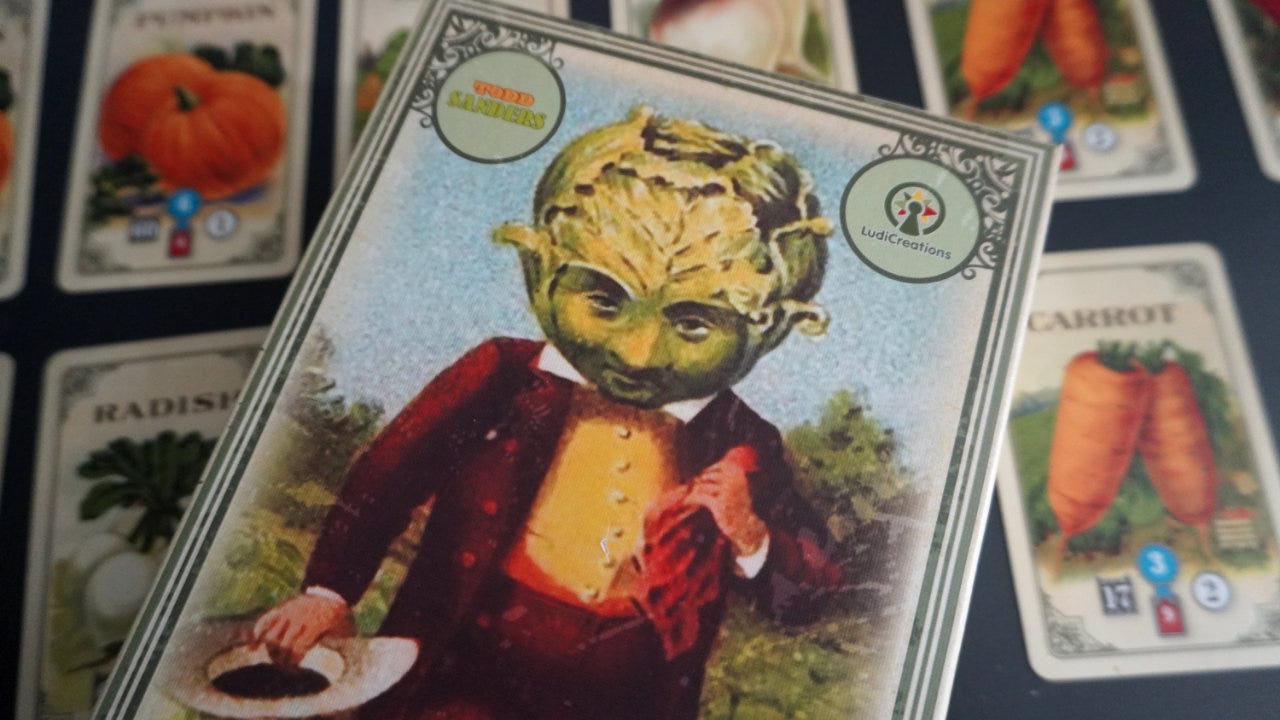
Public domain art is great: The charming anthropomorphic vegetable art in the game is all from public domain sources.4 It’s carefully used in a coherent way that really creates a nice (if quirky) product.
What do you think? Have you seen other games that use a currency with a total economy in the single digits? Let me know in the comments!
— E.P. 💀
P.S. Subscribe to Tumulus and get four quarterly, print-only issues at 33% off list price. Limited back issues available. 🩻
Skeleton Code Machine is a production of Exeunt Press. All previous posts are in the Archive on the web. Subscribe to TUMULUS to get more design inspiration. If you want to see what else is happening at Exeunt Press, check out the Exeunt Omnes newsletter.
Skeleton Code Machine and TUMULUS are written, augmented, purged, and published by Exeunt Press. No part of this publication may be reproduced in any form without permission. TUMULUS and Skeleton Code Machine are Copyright 2026 Exeunt Press.
For comments or questions: games@exeunt.press
Your final issue of the four will include a notice that it’s your last issue. To renew and get the next four, simply place a new subscription order. Be sure to select the issues you want using the dropdown menu!
The deluxe version, which is what I have, has wooden bee meeples and some rules variants for both play and scoring.
This is not to say that it presents a tough choice every turn. There are many turns where there really is (as far as I can tell) one clear answer as to which card should be played. There are, however, more tough choices than there would have been because of this mechanism. It’s a good addition and quite elegant. If you want agonizing choices every turn, go play The Field of the Cloth of Gold.
I believe the art is from the vegetable cards made by John H. Bufford’s & Sons. You can see the box art on Bufford’s Vegetable Cards No. 790-6.