

I first heard the term degenerate game state on the So Very Wrong About Games podcast. It made sense in context even if I didn’t exactly know a definition of it. It seemed to imply the mechanisms of the game were poorly designed, but in a very specific way.
Lately, I’ve been thinking more about degenerate states as they relate to tabletop game design in both TTRPGs and board games. This led me to go hunting for a clearer understanding of the term and perhaps where it came from.
What follows is what I found and why I think it’s an important concept to understand when designing games.1
We need to start with a little geometry, but stay with me.
Every square is a rectangle
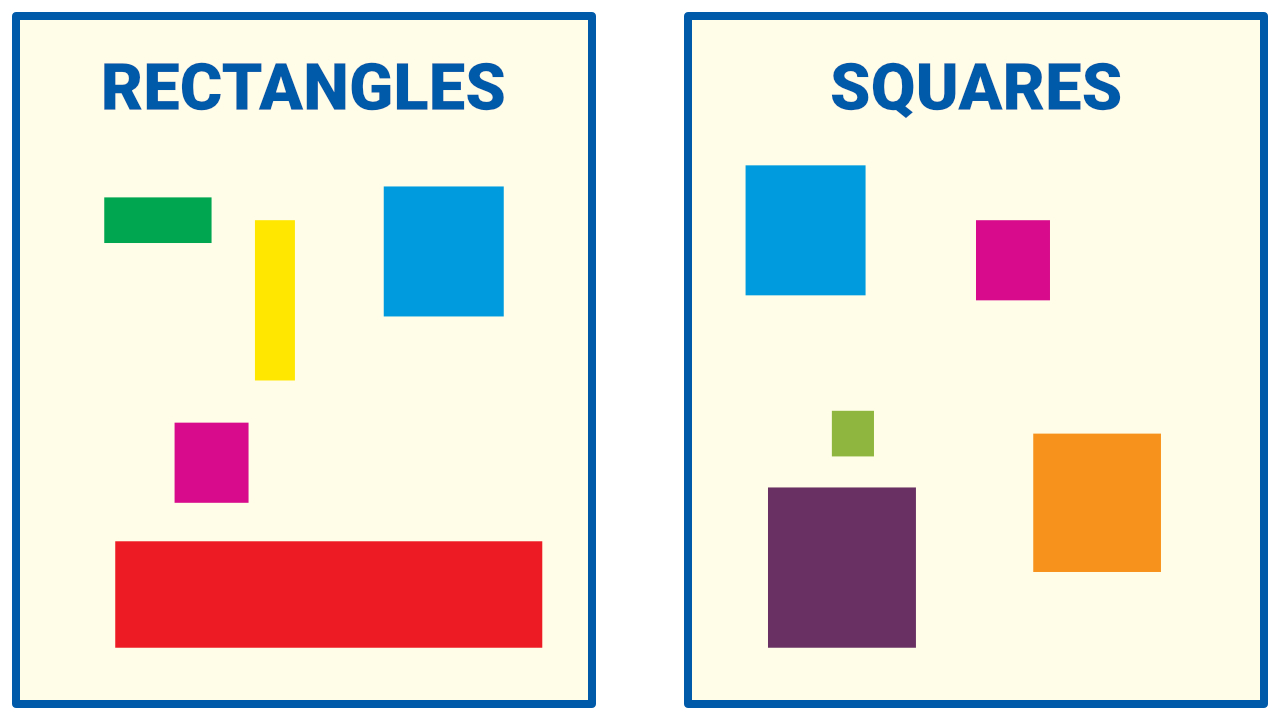
There is a concept in mathematics called degeneracy that is either the root of the term in game design or at least adjacent.2
Here’s how Wolfram MathWorld describes it:
“A limiting case in which a class of object changes its nature so as to belong to another, usually simpler, class.”
First, it is important to understand a limiting case but to understand that we need to think about special cases.
A special case is where every instance of A is also an instance of B but not vice versa. The classic example is that all squares (A) are rectangles (B) but not all rectangles (B) are squares (A). A square is a special case of a rectangle.
Similarly, an equilateral triangle (three equal angles) is a special case of an isosceles triangle (two equal angles).
Pushing it to the limit
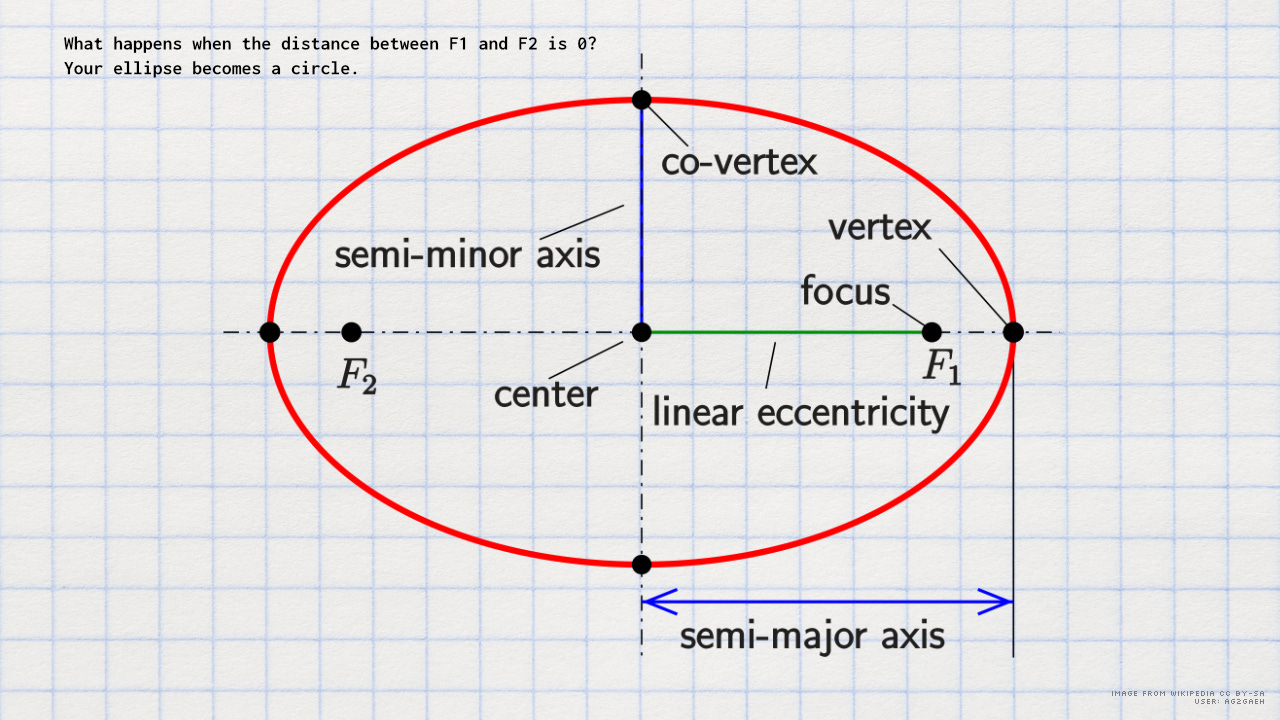
A limiting case is a special case where one or more of the properties of the original are taken to their extreme. It’s a special case pushed as far as it can go — often to zero or infinity. As Paul Stephenson says, “If an object is defined in terms of a variable, it’s worth seeing what happens at the very ends of the range of values it can take.”3
A circle might be considered a limiting case of an oval or ellipse. This is because an ellipse is defined as “a plane curve surrounding two focal points, such that for all points on the curve, the sum of both distances to the two focal points is constant.” Under normal conditions you get a nice egg shape, but what happens if we keep decreasing the distance between the two focal points?
When we reduce that distance to zero (i.e. the two focal points have the same location), it becomes a circle — the limiting case of an ellipse.
Extreme results and degeneracy
In the case of the circle and ellipse, they still sort of look the same. One could easily agree that while the circle is less “ellipse-ish” than a more egg-shaped one. The circle still follows the rules of an ellipse, but it is a very special ellipse.
Other times, when we push the variables to the extreme, the very nature of the original object or concept changes. The result is qualitatively different from the rest of the class, making it a degenerate case.4
Let’s look at two examples from geometry:
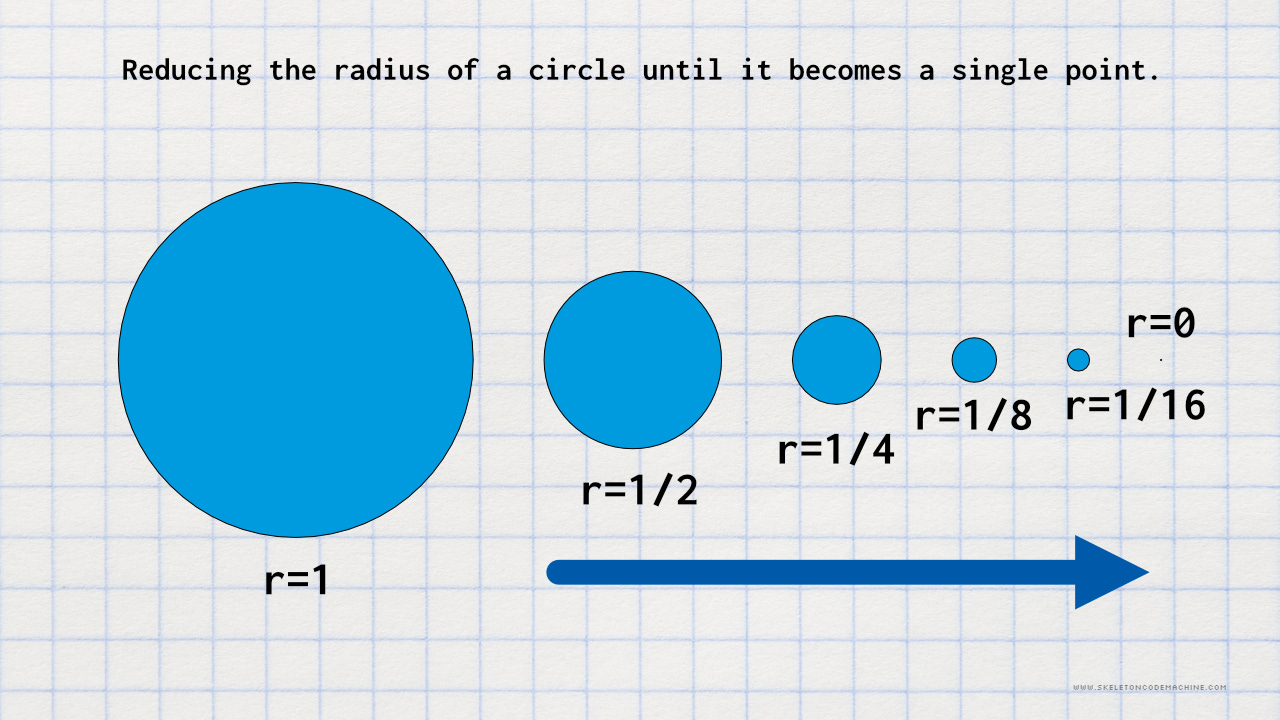
Circle with radius zero: The degenerate case example that makes the most sense to me is a circle. As we reduce the radius ever smaller, eventually the circle becomes a single point. Is it still a circle with radius zero (r=0)? I guess, but it doesn’t qualitatively look and feel like other circles when you do that.
Triangle with a 180 degree angle: You can do something similar with a triangle, where you make two of the angles zero and one of them 180 degrees. It meets all the rules for a triangle, but it no longer looks like a triangle — it looks like a line.
While it is not always the case, many times degenerate cases “belong to another, usually simpler, class” as noted above. Pushing the variables to an extreme, past a special case into a degenerate case makes the final form something simpler, less complex, and sometimes less interesting.
But, for now, let’s hold that definition and think about degeneracy another way.
Hacks, exploits, and degeneracy
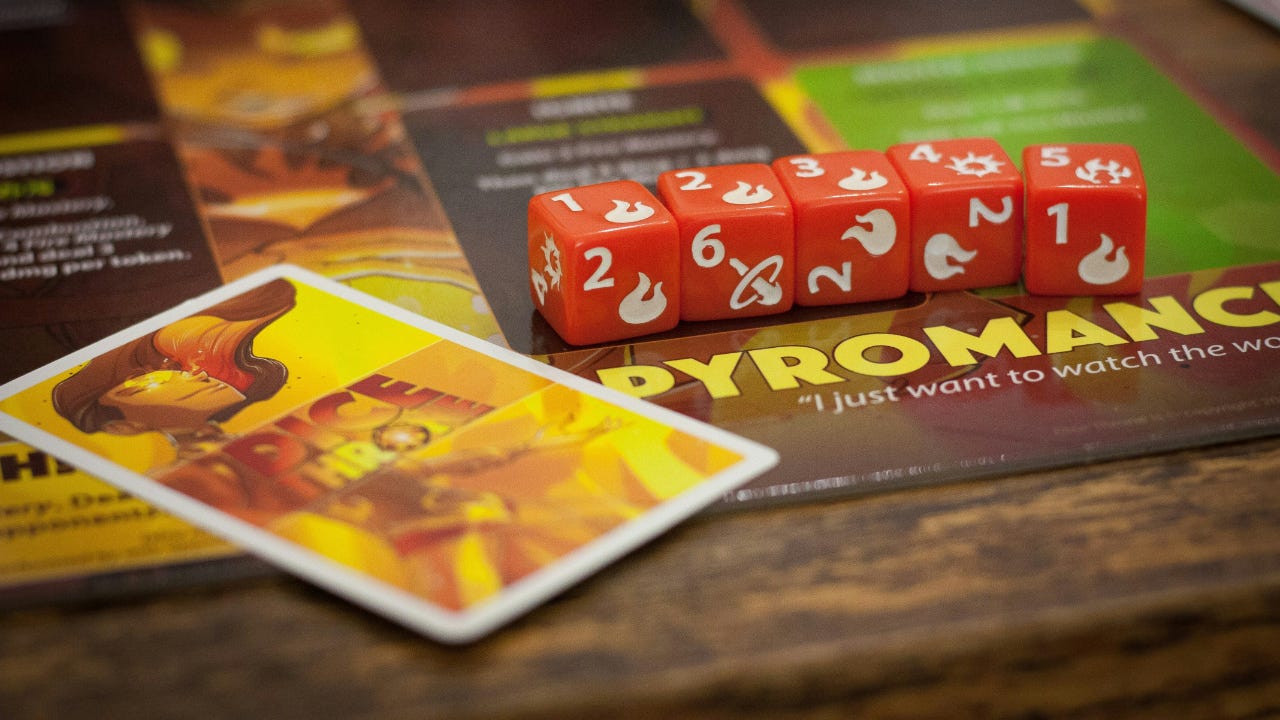
In “The Coming AI Hackers”, Bruce Schneier notes that “Everything is a system, every system can be hacked, and humans are natural hackers.”5
He then gives a few examples of what he considers hacking:
“Airline frequent-flier programs are hacked. Card counting in blackjack is a hack. Sports are hacked all the time. Someone first figured out that a curved hockey stick blade allowed for faster and more accurate shots but also a more dangerous game, something the rules didn’t talk about because no one had thought of it before. Formula One racing is full of hacks, as teams figure out ways to modify car designs that are not specifically prohibited by the rulebook but nonetheless subvert its intent.”
While I think the mathematical definition above is at the root of the modern usage of the term in game design, Schneier’s idea of hacking appears to be mixed in as well. Specifically, the idea of people technically following the rules while at the same time exploiting a weakness in the design is critical.
Browsing the BGG forums and articles on the subject yields multiple related definitions that mix degenerate strategy and degenerate game state. Most of them seem to touch on the idea of hack or exploit:
The abuse of a single mechanism within the game by repeatedly taking the action. While the action itself isn’t a problem, choosing it over and over is.6
A dominant strategy that, while following the strict rules of the game, always leads to victory.7
Actions taken to exploit a weakness in the game design and yet do not violate the rules of the game, making the game less fun for other players.8
A flaw in the design itself that allows a player to gain an unintended advantage.9
Playing in a way that ignores the unwritten rules of the game. Not playing the game in the proper or intended manner.
More than just a hack, however, there is often a focus on an exploit that is not prohibited by the rules. I found this analogy from a Reddit comment about “take that” mechanisms and degenerate game states to be helpful:
“Consider sports: There are sports that permit physical contact, and sports that do not. Even the sports that permit contact have rules about how far you’re allowed to go. One of the reasons for this is because if you don’t reign in physical contact, violence can become the most dominant way of playing the game: if you physically cripple your opponent, you’ve effectively won. So it no longer ends up being about the actual game, the focus becomes winning on the physical contact aspect.”
Although I am not a game theory expert, all of these ideas seem very close to the concept of strategic dominance, where “strategy A dominates another strategy B if A will always produce a better result than B, regardless of how any other plays.”
Is strategic dominance an example of degeneracy in games?
I think it can be, but perhaps not always. Let’s look at three possible examples.
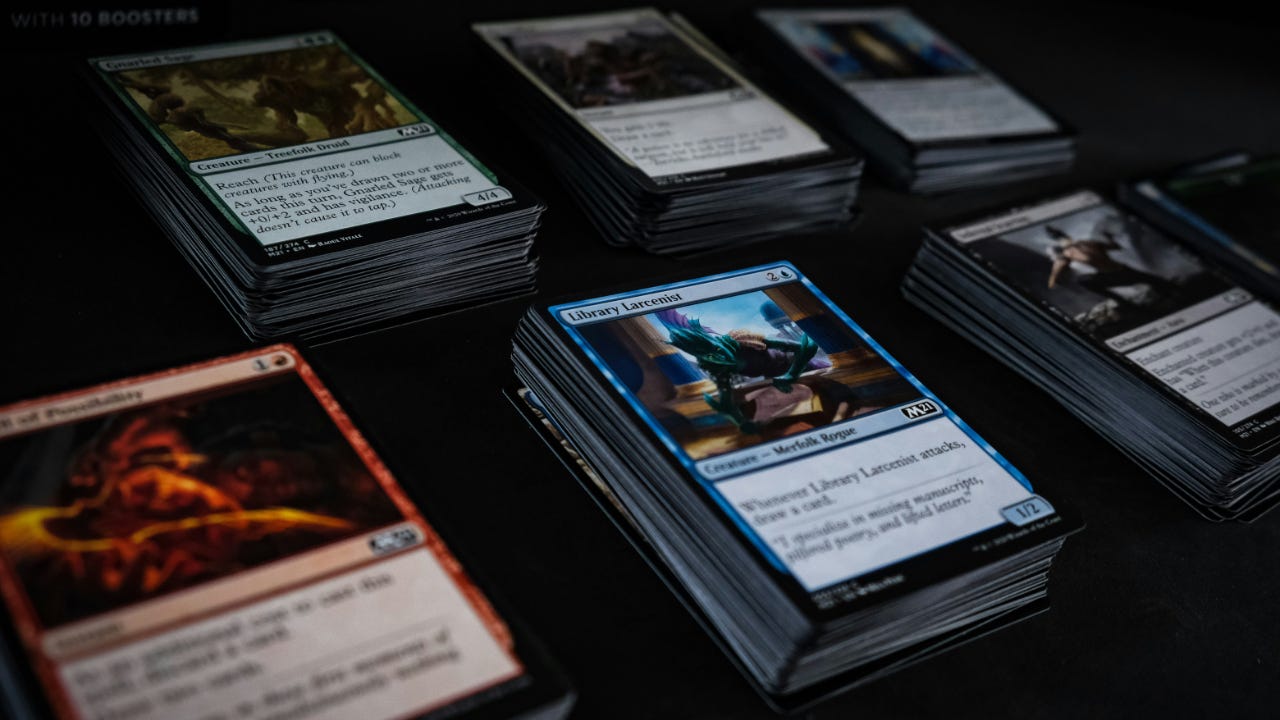
Ex 1. Black Lotus in Magic: The Gathering
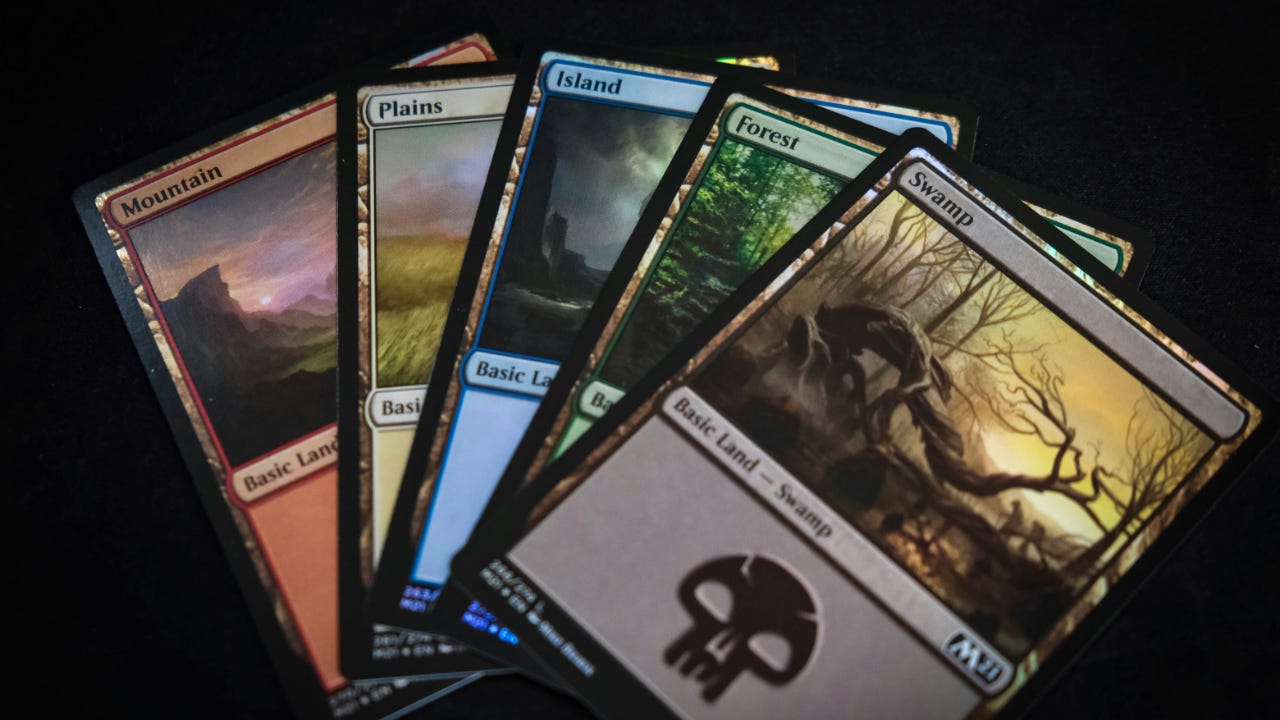
The most commonly cited example of degenerate play is from Magic: The Gathering, a game I have surprisingly little experience with.10 The exploit is described in Rules of Play (Zimmerman and Salen, 2003):
“In early editions of Magic: The Gathering, certain card combinations were simply too powerful and could destroy a player on the first turn, before a match had a chance to develop. Wizards of the Coast, the publishers of the game, declared certain cards “officially” illegal, most notoriously the Black Lotus card, in order to keep this kind of play experience in check. In regulated tournament play, the outlawed cards were not used.”
Again, we see that the game has been “hacked” or “exploited.” While the rules (as written at the time) are followed, a strategy or method can be used to ensure victory and presumably reduce the fun of the other players involved.
Ex 2. Big Money in Dominion
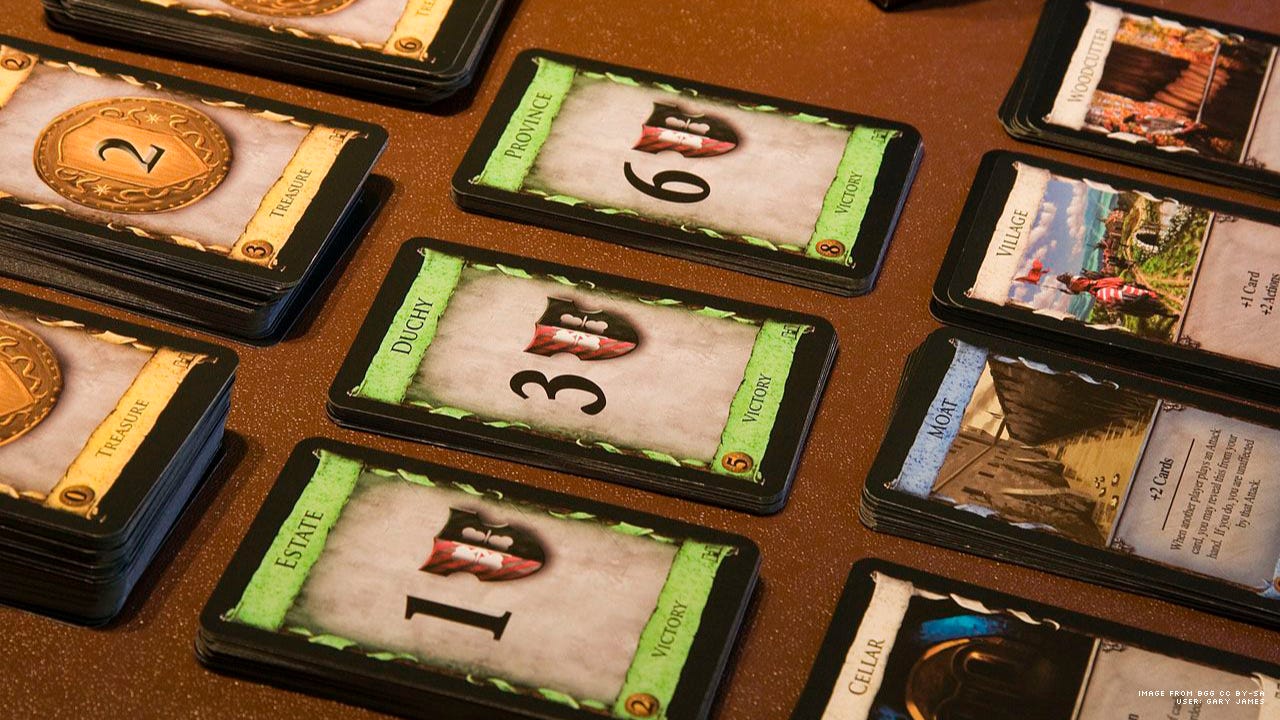
Some examples are less clear if they are degenerate strategies or not.
The Big Money strategy in Dominion (Vaccarino, 2008) reduces the game to a simple formula: “Buy Province with $8, buy Gold with $6-$7, and buy Silver with $5 or lower.”11
Big Money appears like a degenerate strategy against novice players. It almost always wins and it collapses the game decision space into an easy and obvious strategy. It reduces the fun for the other players and potentially for even the person using it.12
But Big Money is not invincible. Adding a Smithy to draw more cards can enhance Big Money in a way that improves it versus the basic, vanilla Big Money. Adding cards from expansions creates even more Big Money beating strategies. One could make the argument, as the Dominion Strategy website does, that, “Studying a board to figure out how to design a deck capable of beating Big Money: well, that’s what Dominion is all about.”
Zimmerman and Salen are careful to note the same idea in Rules of Play, stating that “there is something exciting about having players explore the space of possibility in your game, rooting around for new strategies and new ways to play.” This creates what they call degenerate strategy ecosystems in which players continue to find exploits that invalidate the earlier ones and improve the game experience overall.
Ex 3. The three-player problem and turtling
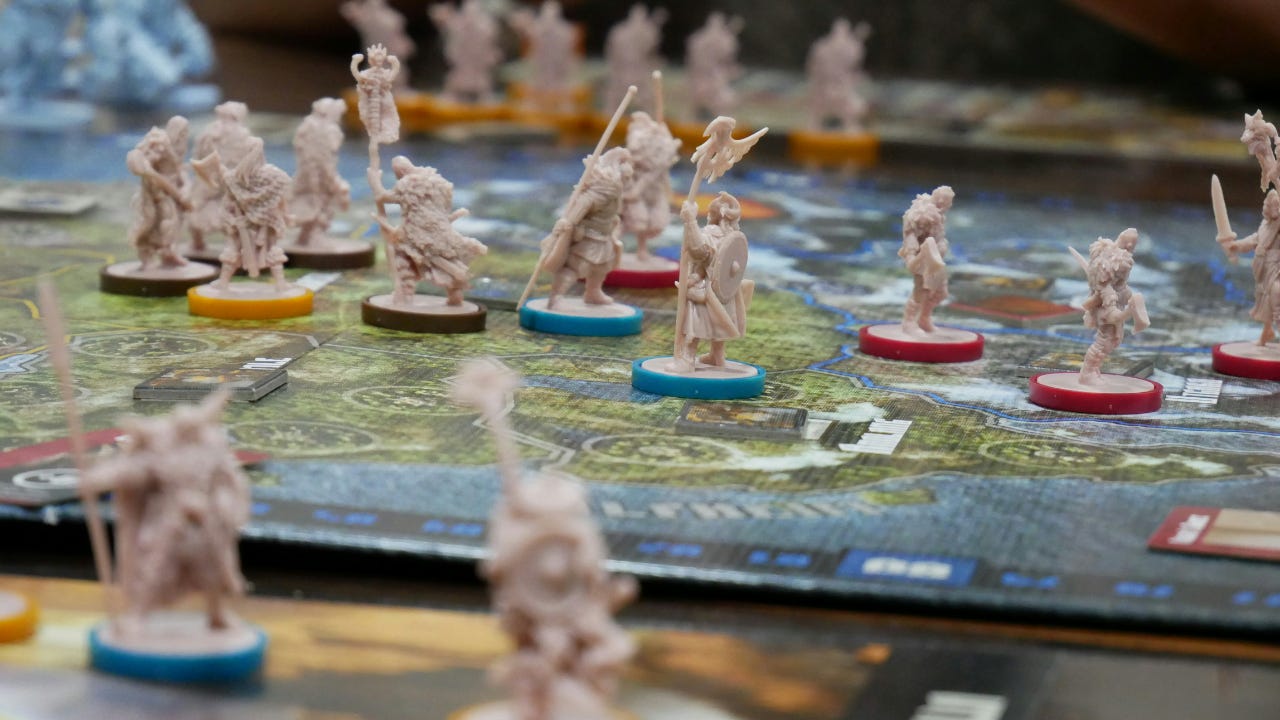
I’ve mentioned Lewis Pulsipher’s three-player problem a few times before:
“In a three-player conflict game (e.g. a historical wargame) if there are three players, the two players who are behind will generally team up and attack the player in the lead.”
In itself, three-player conflict game designs aren’t the problem. Problems can arise, however, if all players decide to turtle — focus solely on defense rather than offense.
The strategy becomes one in which you wait for the other players to be weakened by fighting each other so you can swoop in and win. When everyone does this (i.e. everyone turtles), this creates a potential degenerate game state where play collapses into simply waiting for someone to attack.
It is notable that this is not a dominant strategy because it may not reliably result in victory for the player using it. Instead, it collapses the entire game state.
Adjacent concepts
Before we settle on a working definition of degenerate strategies and game states, it is important to note some adjacent concepts. I’ve seen all of these referred to as examples of degenerate game states, but that categorization could be debated:
Soft locks: In video games a soft lock (or softlock) can occur when the game remains playable, menus can be accessed, but progress is halted due to a design flaw. For example, the quest item to spawn the boss monster is lost or you are trapped in an area of the map with no exit.13 I think this is very close to the three-player turtle problem noted above.
Excessive garbage time: We previously explored garbage time in games in the context of closure and conceding defeat. Excessive garbage time in a game also collapses the strategy for players in a way similar to a degenerate strategy. There are few decisions to be made and instead it’s just playing it out to the end.
Kingmaking: I’ve seen oft-hated kingmaking brought up as an example of degenerate play. I’m not sure I agree with that, as it feels more like a value judgement or kind-of-fun preference than a true degenerate game state. Has the game been reduced to something simpler that is qualitatively different from the original? Perhaps.
Fragile game design: All of these examples and discussions seem to go back to our exploration of what Cole Wehrle calls fragile game design. Fragility is something different than victory points and the written rules. It is the unspoken and unwritten rules that are just as important (or more important) than the rules themselves. Some of the examples of degenerate strategies seem to violate the unspoken rules of the game which is why players may frown upon them.14
It is possible (and seemingly common) for people to describe things they don’t like in games as being degenerate. I understand this because it is a messy concept to try to define.
That said, I’m going to try to describe it in a way that makes sense to me and is useful when analyzing games.
A collapse into a simpler form
Let us return to our original definition of mathematical degeneracy: “A limiting case in which a class of object changes its nature so as to belong to another, usually simpler, class.”
To me, this is the most helpful starting point for understanding degenerate strategies and degenerate game states in games. Degenerate not in the sense of a “declining” or “worse” state — just a simpler class that is qualitatively different from the original.
Just like the ellipse that can be exaggerated until it is a circle and eventually just a point, games can retain their original rules and yet become something different — something simpler.
A degenerate strategy or degenerate game state is therefore one in which the game, while following its own rules, collapses into a simpler form that is qualitatively different from the original.15
I like this definition because it removes the value judgement from it. While this collapse into simplicity is often associated with a reduction in fun and interest it doesn’t always need to be the case. I’d argue degenerate game states are almost always bad, but it leaves a tiny bit of room for exceptions. The game is different, and often that means worse, but perhaps a counter example could be found.
It also doesn’t rely on the use of a hack, exploit, or loophole for a degenerate strategy or degenerate game state to occur. That implies player intent which can be messy. Instead it focuses on the results.
The key elements are a (1) strict adherence to rules, (2) a reduction to a simpler form, and (3) the simpler form is qualitatively different from the original game.
A degenerate game state is when there is some inherent part of the game’s design that allows the play to collapse into something simpler and different than the original game. It’s when a wargame turns into a game where it makes no sense to start a battle or an economic game where repeating a single action is the best path to victory. All the rules are still in place, but some variable has been pushed to an extreme.
Degeneracy is when your elliptical game collapses into a single point.
We are loophole exploiters
In the AI hacking article above, Bruce Schneier notes: “Hacking is as old as humanity. We are creative problem solvers. We are loophole exploiters. We manipulate systems to serve our interests.”
This is true and unavoidable. If there is a way to exploit a game design, someone will eventually find it. Players are looking for ways to win, trying new strategies, and exploring the decision space. In that process they may very well find a degenerate strategy.
So how do we handle this? In Rules of Play, the authors are direct in their opinions:
“Try to find degenerate strategies and get rid of them! We learned in the previous schema that positive and negative feedback systems can emerge unexpectedly from within a game’s structure and can ruin a game experience for players. The same is true of degenerate strategies. A close analysis of your game design can sometimes reveal them but the only real way to root them out is through rigorous playtesting.”
This is solid advice.
In the end, it is only extensive playtesting that can prevent degenerate strategies and game states.
Conclusion

Some things to think about:
Degeneracy as collapse: I write Skeleton Code Machine articles as a way to learn and to organize my thoughts. Writing this has helped me think about degenerate game states as a collapse into a simpler form that inherently changes that game — not a way I thought before I started. I hope this is a helpful piece of vocabulary and a tool for you to use in game analysis.
Value depends on context: It is very easy to blend value judgements (i.e. “this is good” or “this is bad”) with technical game terms. Degenerate game states are often bad, but we can create a more objective definition at the same time.
Playtesting is the way: In the end, as with most of game design, the only way to sort this all out is with extensive playtesting. Having recently run playtests at Unpub, I can confirm that nothing finds flaws like public playtesting.
What do you think? Were you familiar with the concepts of degenerate strategies and game states or is this new to you? How would you define it? If you can think of more examples from games, let me know in the comments!
— E.P. 💀
P.S. Want more in-depth and playable Skeleton Code Machine content? Subscribe to Tumulus and get four quarterly, print-only issues packed with game design inspiration at 33% off list price. Limited back issues available. 🩻
Skeleton Code Machine is a production of Exeunt Press. All previous posts are in the Archive on the web. Subscribe to TUMULUS to get more design inspiration. If you want to see what else is happening at Exeunt Press, check out the Exeunt Omnes newsletter.
Skeleton Code Machine and TUMULUS are written, augmented, purged, and published by Exeunt Press. No part of this publication may be reproduced in any form without permission. TUMULUS and Skeleton Code Machine are Copyright 2025 Exeunt Press.
For comments or questions: games@exeunt.press
I want to be very clear that this article represents what I’ve learned about degenerate game states as described at Board Game Geek (BGG), Reddit, and other sources. The word “degenerate” gets used in different ways in board games vs. TCGs, so it’s very hard to pin down. What I propose as a definition does not necessarily represent the context in which So Very Wrong About Games uses the term, as I was unable to find where they provided a strict definition of their own.
Degeneracy is also used in game theory, but it’s really complicated and I’m not sure I fully understand it enough to talk about it — even more so than the definition from mathematics. If you are a game theory nerd, please educate me in the comments.
See The Limiting Case: Sublime or Ridiculous by Paul Stephenson for more on this.
A limiting case is a special case of special cases and a degenerate case is a special case of limiting cases. Think about that one for a little while.
The Coming AI Hackers by Bruce Schneier published at the Harvard Kennedy School Belfer Center for Science and International Affairs.
This definition comes from What is degenerate? by Taekwan Kim at Game Developer. The context is video games, but I think the description applies to tabletop games just as much.
This is the definition presented in Rules of Play by Eric Zimmerman and Katie Salen (Ch. 19, p. 11): “This style of play, based on exploiting a strategic saddle point, is called an exploit or degenerate strategy. A degenerate strategy is a way of playing a game that ensures victory every time.”
The Degenerate Play post by Possible Modernist uses the idea of “makes the game less fun” as a key part of degenerate play. I tend to agree with this. This was one of the best blog posts I’ve read on the subject.
This definition is mentioned as a quote in Game Design Loopholes by Julian Pritchard. The source is Game Design Workshop: A Playcentric Approach to Creating Innovative Games by Tracy Fullerton: “A loophole can be defined as a flaw in the system that users can exploit to gain an unfair or unintended advantage.” This same article is where I learned that The Prisoner’s Dilemma is an example of a dominant strategy that is not a degenerate strategy.
I’ve played a few times, even going so far as to purchase cards for a Bloomburrow deck.
This description is from the Dominion Strategy website. The Dominion Strategy Wiki has more analysis on the Big Money strategy, including why it doesn’t “solve” the game.
The more severe version of this is the hard lock which has more debate around its definition. Most would say a hard lock is when the game crashes, the controls become unresponsive, and only a reboot or restart will fix it. Others argue that a hard lock is when your save file is so impacted that you need to restart from an earlier save, as opposed to a soft lock where you can reload your latest save game. I don’t have an opinion and will let smarter video game designers than me argue this one.
It is notable that degenerate strategies and exploits are generally considered to be a “bad thing” in multiplayer tabletop games. And yet they might be considered positive, fun, and valid in single player video games.
I do not presume to claim this is an original or novel definition. Quite the opposite. It is my synthesis of everything I’ve read on the subject which no doubt led me to the same place as many others. My guess is that this definition is already widely in use in the game design community. I just got there taking the longest route possible.
I wonder if a good simple example is found in noughts and crosses (tic tac toe). It’s a common introductory game that just needs pencil and paper, but kids quickly understand that if you start in the centre position it is almost impossible to lose. Against experienced players it is always a draw, but you might find someone unfamiliar who gifts you the victory.
Soon people stop playing the game because the result is a foregone conclusion. Seems like a kind of degenerate state to me?
Incidentally I found a productive way of keeping playing a little longer was to start in a corner - people were less likely to be familiar with that, and were more likely to fall into traps!
I think the platform is eating reader comments today. I swear I just read a good one and now it’s gone. 😐