
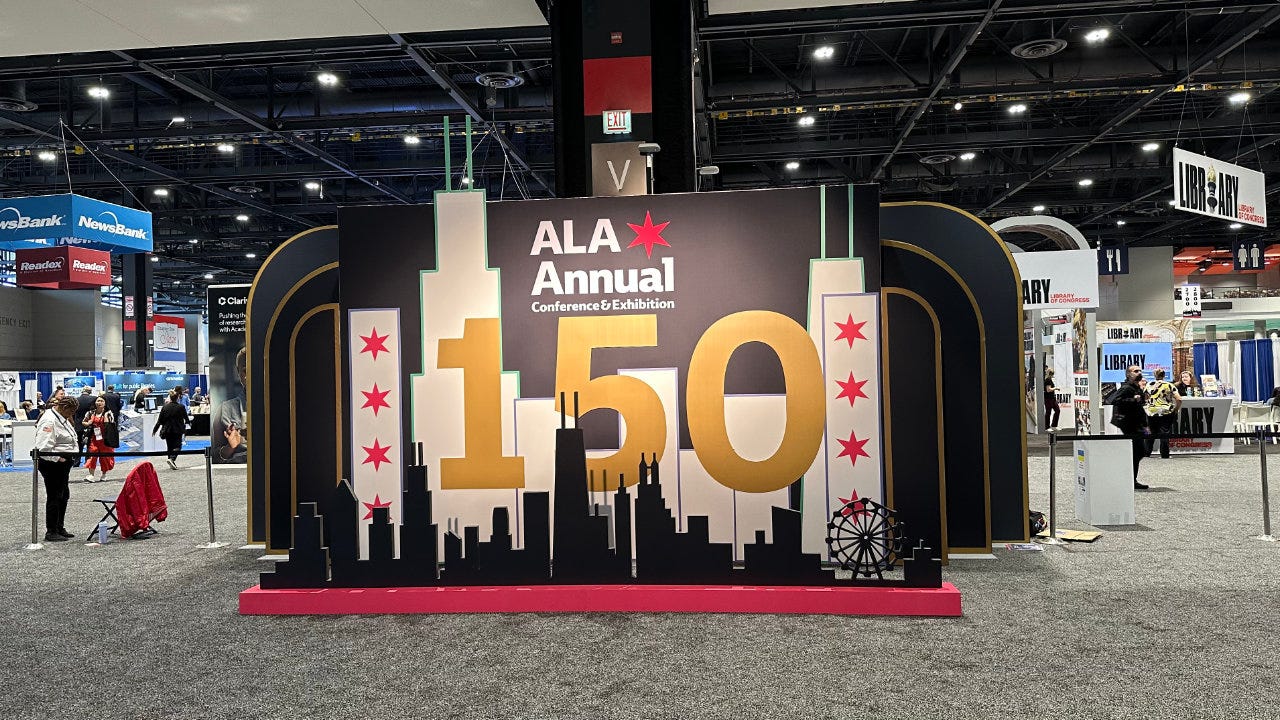
I was on the Why We Can’t Shut Up about Game Jams panel at the American Library Association (ALA) Annual Conference & Exhibition in Chicago this week. Organized and hosted by Rebecca Strang, the panel focused on how libraries can integrate game jams into their programming:
This panel brings together librarians and game publishers to share their experience and ideas on hosting game design workshops at your library! From iterating on existing games to creating original ones, from board games to tabletop roleplaying games, from single-day events to a month-long event, come learn how play can foster creativity, facilitate community, and build connection with library resources and services.
I was one of the four people invited to be on the panel:
Molly Porter, GameRT Meeple-at-Large, Branch Manager, Ascension Parish LIbrary at Dutchtown, Prairieville, LA
Amber Sewell, GameRT Mage, University of Nevada, Las Vegas, NV
Jeff Grisenthwaite, Game Designer
John Mulligan, Game Designer, Exeunt Press
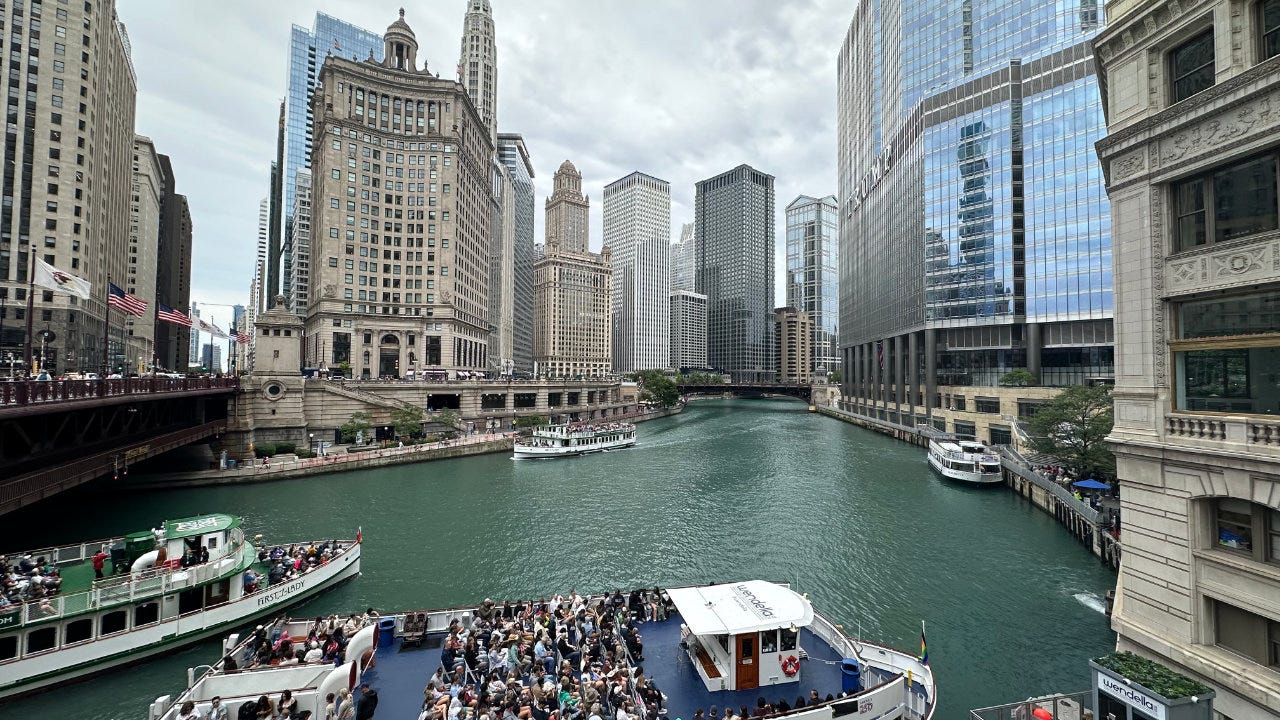
The room was full and everyone seemed to really enjoy the panel. So here are my responses to the first five questions, along with some Chicago pictures.
Q1. What is a game jam?
I’ve written about game jams before, but (to me) game jams have three common elements:
It’s a game development sprint.
There is a limited time period.
There is a specific theme, format, mechanism, or technology required.
How those three elements are defined and implemented can widely vary. A tabletop game jam might focus on a single game or system (e.g. Fallen RPG Jam) or on a broad genre of games (e.g. wargames in Postcards from the Front). The One-Page RPG Jam starting on July 12, 2026 requires that the submissions be playable RPGs and that each one fits on a single sheet of paper.1
Game jams can be ranked or not. I tend to prefer unranked game jams because I feel like the idea of having “winners and losers” (explicitly or tacitly) acts as a barrier to new creators giving it a try. When it’s just about making something for the sake of making something, I’ve found people are more likely to give it a try.
Q2. What is your experience with game jams?
My first experience with a game jam was the Tiny Tome Jam in 2021. I created and submitted Mammoth — a game about hunting and gathering in the Late Pleistocene age. It ended up being included in the printed Tiny Tome book and inspired me to continue with game design.
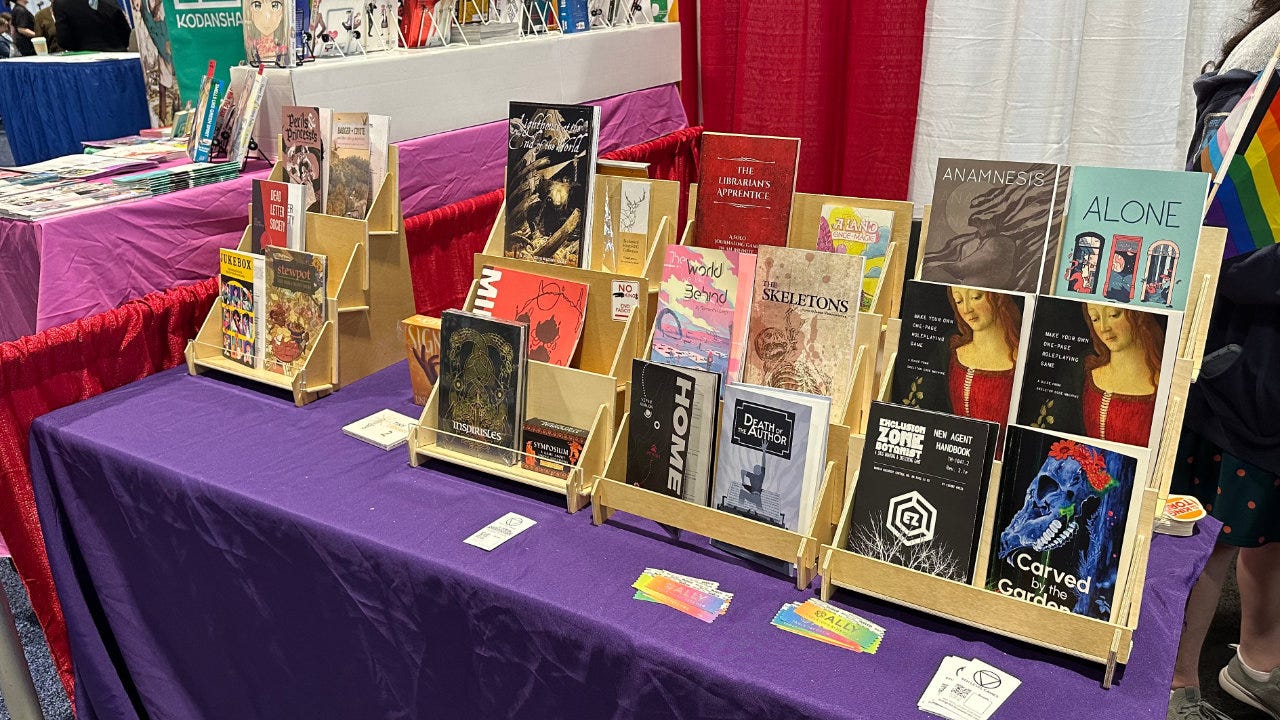
Since then, I’ve participated in quite a few game jams. One of the most recent was making The Trench Grub’s Thirst for last year’s Appendix N Jam. The one that is most dear to me, however, is the annual One-Page RPG Jam. It’s that one that inspired me to create Exclusion Zone Botanist, Eleventh Beast, and Caveat Emptor — three of the bestselling games from Exeunt Press.
I also ran a one-page RPG jam as part of a free class I taught at a public library. Using Make Your Own One-Page RPG, I taught a four-session, free class at one of my local public libraries. You can read summaries of each class: Week 1, Week 2, Week 3, Week 4. We even ended the class with our own game jam where all the participants uploaded their games to itch.io.
In some ways, the MÖRKTOBER event I host each year is also like a game jam, albeit one that is chaotic and decentralized by design. It is focused on making things related to the MÖRK BORG TTRPG, and has a limited time period that runs from October 1 through October 31 each year.
I also keep threatening to run a game jam for Skeleton Code Machine readers too.
Q3. What challenges have you had with game jams?
For me, the first challenge would be to run a game jam in a single workshop session. When I run classes at public libraries, I never know who is going to show up. Some participants might have a lot of experience and may have even designed a game before. Other participants may have little to no gaming experience. To make a program that is fun and engaging for everyone, I’ve broken it into multiple sessions to ensure no one is left behind.
The second, perhaps most common challenge, is convincing people they can make a game! It takes a lot of encouragement. Showing examples of small games that are a little rough around the edges really helps.
Connected to that is the third challenge, which is to break the large task of “making a game” into smaller, achievable tasks. When I ran the game jam at the library, we did each step of the process together. We decided who our game would be for, we each chose a theme, we each explored possible mechanisms together, and so on. By ensuring we did each little step together, by the end, everyone had a game.
The final challenge is promoting the event. This requires a large amount of work and effort, usually on the part of the library staff. I talk about how and when to promote the event at length in the “How to run a tabletop game design workshop at your library” I presented for the Indiana State Library.
Q4. What tips do you have for running game jams?
My experience with game jams has been largely with TTRPGS and with public libraries. Given that, here are some of my tips:
Help people choose a theme for their game. This is the hardest part, so don’t make them struggle with a blank page. Use the Theme-O-Matic.
Encourage people to use an existing framework or SRD like Lasers & Feelings or Wretched & Alone. There’s no need to start from scratch.
There are freely available art assets and icons to use. Share places where everyone can grab public domain art to use.
Leverage local board game groups. Contact your library’s board game club, your friendly local game store, Unpub, and Break My Game. This helps with the promotion challenge noted above.
Q5. What’s your favorite story related to a game jam?
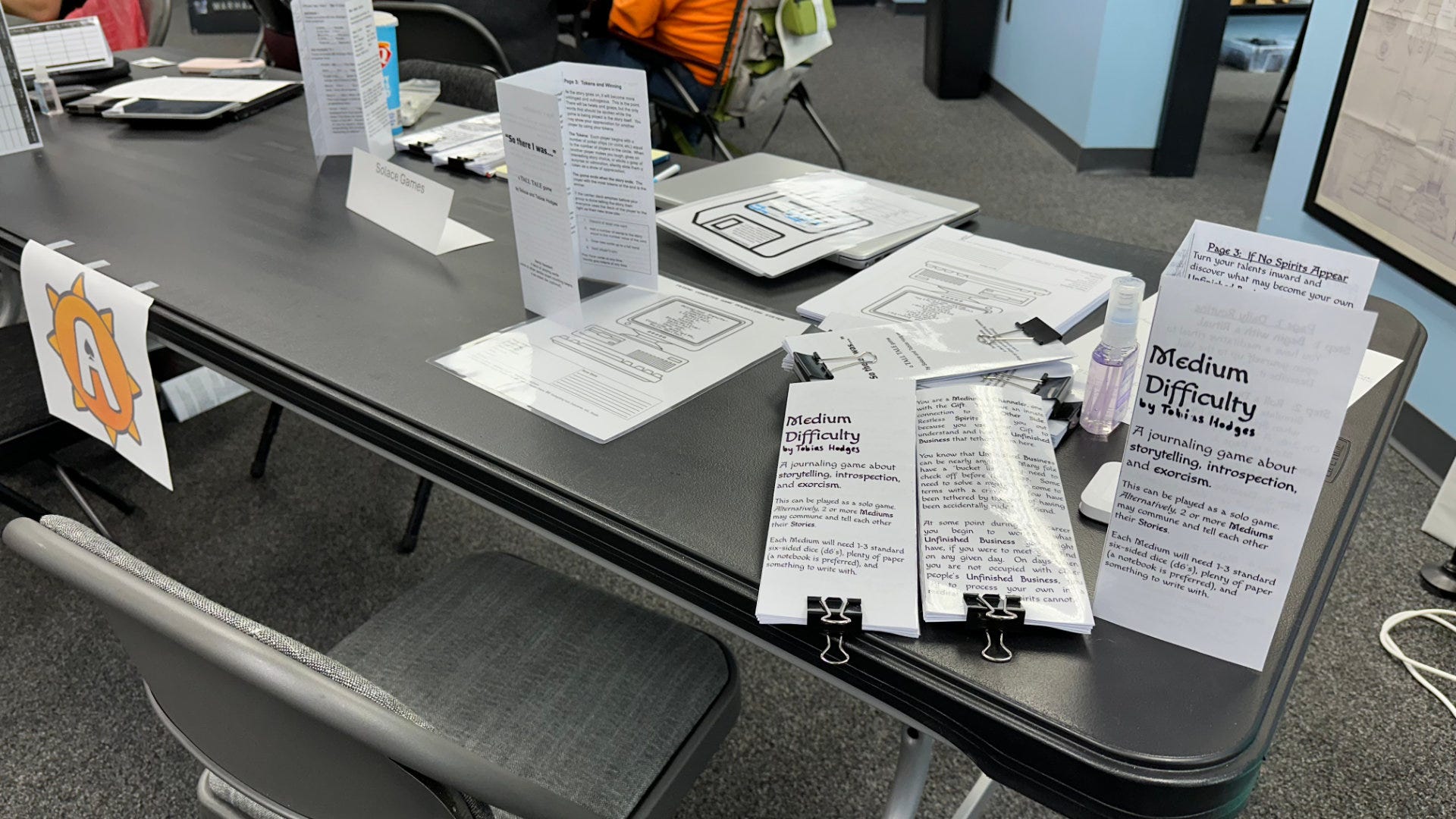
A few of the creators in the Make Your Own One-Page RPG public library class not only made their first games, but sold them at a game store’s local developer day. This really made the class seem worthwhile, not because of the sale, but because attendees went from zero to published game in just four sessions. They created something new, wonderful, and something they were proud to share with the gaming community.
I can’t think of a better conclusion to the class than that.
Visiting Chicago
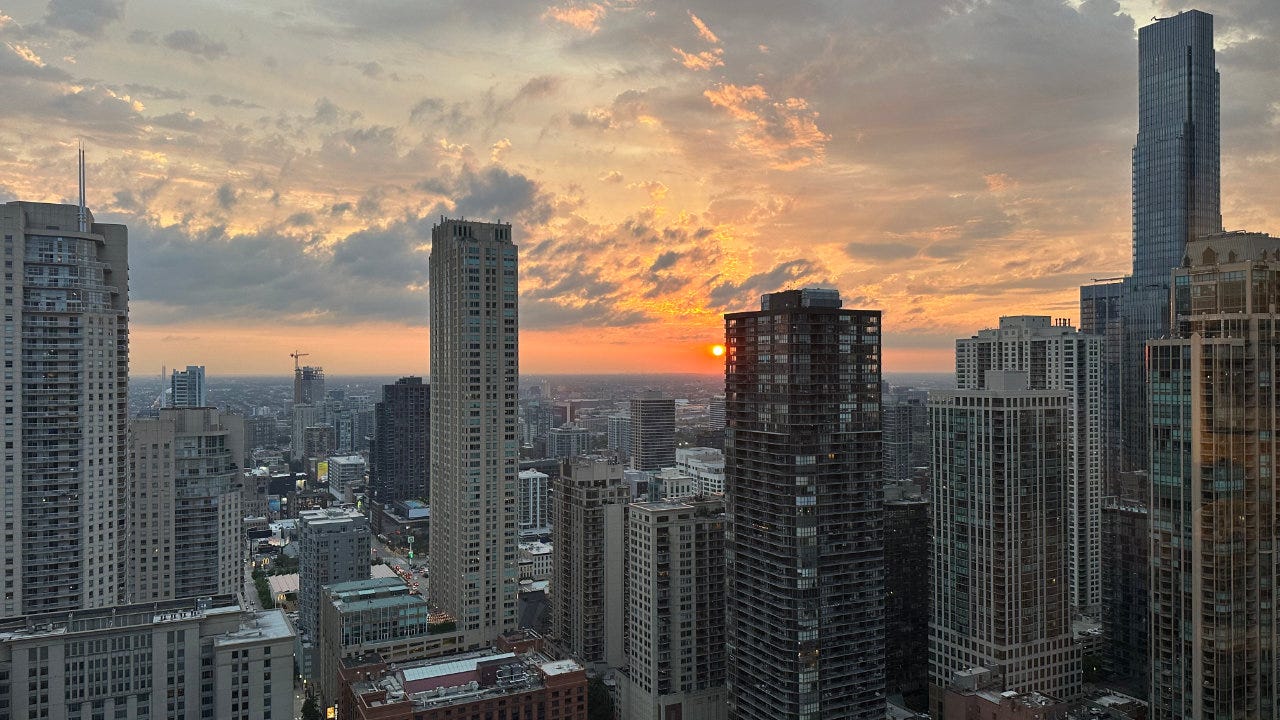
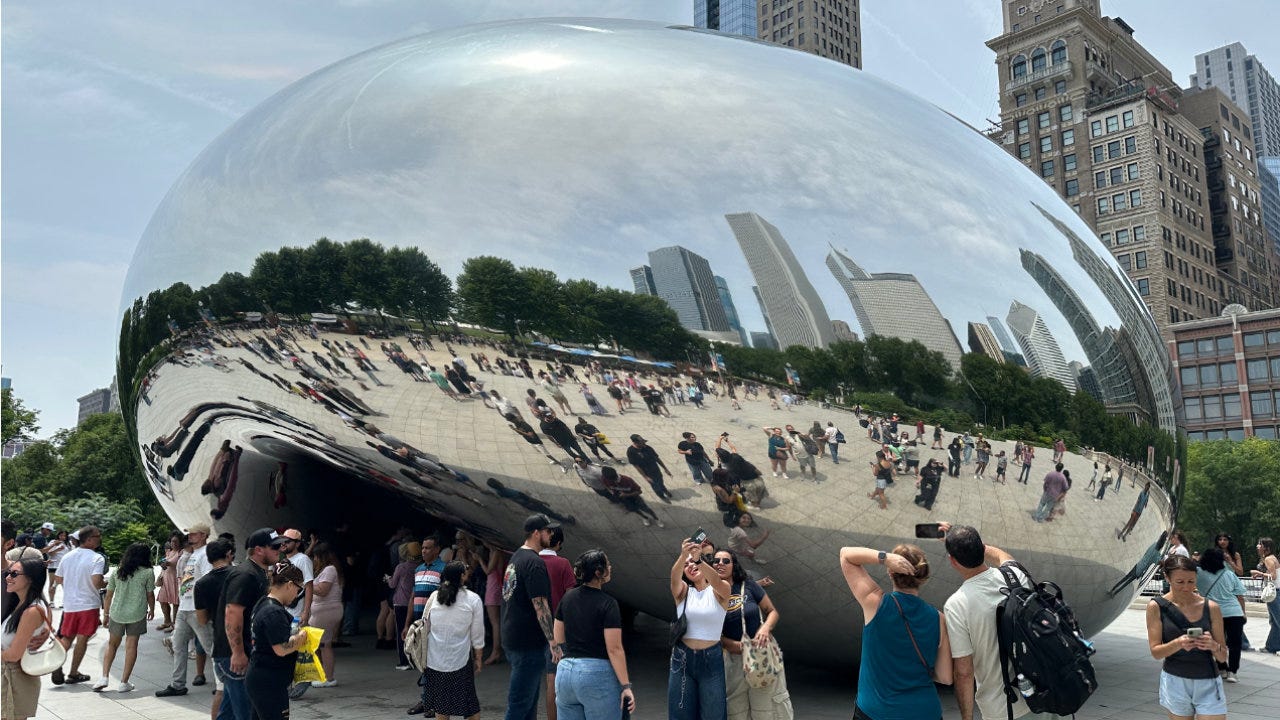
I have to share that this was my first visit to Chicago and I had such a wonderful time. Sightseeing included Cloud Gate (the bean), The Art Institute of Chicago (as seen in Ferris Bueller), eating deep dish pizza, and having my first Chicago-style hot dog.2
Thank you so much to Rebecca Strang for setting up the panel and for inviting me. I had an absolute blast both during my day at the conference and visiting the city in general. I hope to visit again soon!
Conclusion
Some things to think about:
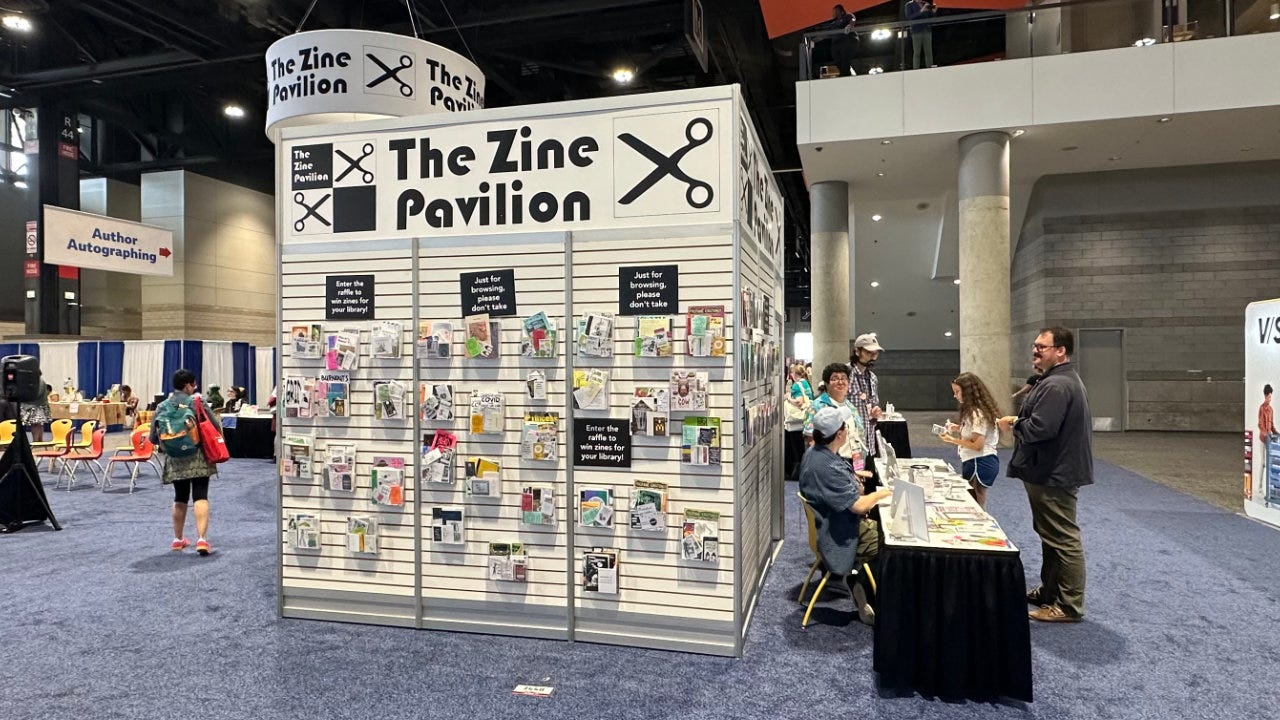
Libraries are amazing: It was inspiring and energizing just to be around that many people who love libraries, many of whom have dedicated their entire lives to supporting libraries. Check out the work that the ALA does.
You should participate in a game jam: They are good for the soul. Creating something feels great. Actually finishing a project (even a small one) can be so satisfying. Make weird games!
Consider running a game jam: This is obviously a lot more work and not for everyone, but you should at least think about it. Check out the interview with Chris about his recent Lean Green Zine Jam.
Have thoughts on game jams? Leave a comment below! Also, vote in this week’s poll.
— E.P. 💀
P.S. Want more in-depth and playable Skeleton Code Machine content? Subscribe to Tumulus and get four quarterly, print-only issues packed with game design inspiration at 33% off list price. Limited back issues available. 🩻
Skeleton Code Machine is a production of Exeunt Press. All previous posts are in the Archive on the web. Subscribe to TUMULUS to get more design inspiration. If you want to see what else is happening at Exeunt Press, check out the Exeunt Omnes newsletter.
Skeleton Code Machine and TUMULUS are written, augmented, purged, and published by Exeunt Press. No part of this publication may be reproduced in any form without permission. TUMULUS and Skeleton Code Machine are Copyright 2025 Exeunt Press.
For comments or questions: games@exeunt.press
This restriction to just a single piece of paper is wonderful. It both forces you to be creative and also makes it a project you can actually finish. It’s a great way to get creative.
As per Wikipedia, a Chicago dog is “a hot dog comprising an all-beef frankfurter on a poppy seed bun, originating in Chicago, Illinois. The hot dog is topped with yellow mustard, chopped white onions, bright green sweet pickle relish, a dill pickle spear, tomato slices or wedges, pickled sport peppers, and a dash of celery salt.” It is amazingly delicious.
The horror! I accidentally clicked the poll while scrolling and it registered "deep dish pizza" as my vote when I definitely would vote TAVERN CUT.
Also, and more importantly, haha, thank you so much for joining us! It was great to have your experience on this panel. We received really great feedback from attendees (and even some wishing it were a longer session or workshop), and it was great to see the interest from library folks.
libraries are the best :D this was a great read :) glad you had a nice time! thank you for sharing <3